
Trump: Was This Secret Plane Swap in Turkey a Brilliant Move or a Warning?
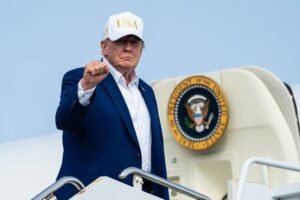
When Trump leaves a foreign summit, the aircraft carrying the president is normally one of the most visible parts of the trip. But his departure from Turkey after the 2026 NATO summit turned into something very different: a highly unusual security operation involving multiple aircraft, a concealed transfer and a decoy.
Trump has now acknowledged that the Secret Service and military authorities instructed him to change planes because of a threat. He also said the smaller aircraft he ultimately boarded was, in his view, at greater risk than the aircraft being used as a decoy.
The episode raises an obvious question: Why would presidential security officials deliberately make it look as though Trump was leaving Turkey on one aircraft while he was actually traveling on another?
Here is what is publicly known—and what remains unclear.
What happened to Trump in Turkey?
Trump attended the 2026 NATO summit in Ankara, Turkey, in July. White House records show him arriving at Etimesgut Air Base aboard Air Force One for the summit.
The departure was considerably more complicated.
According to reporting published after the operation, U.S. officials received intelligence about a potentially serious threat involving the president. Security officials subsequently arranged for Trump to leave Turkey aboard a smaller military aircraft rather than the aircraft people expected him to use.
The familiar presidential aircraft was reportedly used as a decoy.
Trump later confirmed that the aircraft change was made at the direction of security officials. He indicated that he did not ask for extensive details about the threat and instead followed the instructions of the Secret Service and military personnel.
That distinction matters. The publicly available information does not establish every detail of the threat, and some operational information would naturally remain classified or undisclosed.
Why did Trump change planes?
The central reason reported by multiple outlets was a security threat connected to Iran.
The Washington Post reported that U.S. authorities had received information concerning a credible threat and that the aircraft switch formed part of a broader deception operation intended to make it harder for a potential attacker to determine Trump’s actual location.
The Telegraph similarly reported that intelligence concerning an Iranian threat prompted the aircraft change.
However, it is important to separate confirmed facts from reported details.
The confirmed part is that Trump says he was instructed to change aircraft because of a threat. The precise intelligence behind the decision, the full assessment of the danger and the operational planning remain matters that the public cannot independently verify.
That is typical of presidential protection operations.
Why use another aircraft as a decoy?
The basic security principle is straightforward: uncertainty can be a protective tool.
If an adversary knows exactly which aircraft contains the president, where it is going and when it will depart, the president’s movement becomes easier to track.
A decoy can complicate that calculation.
In this case, reports indicate that Trump was publicly associated with one aircraft while secretly transferred to another aircraft. The goal was reportedly to conceal which aircraft actually carried him out of Turkey.
This is not the same as saying the decoy aircraft was abandoned or irrelevant. Presidential travel often involves backup aircraft, support aircraft and carefully coordinated movements.
The U.S. Air Force’s 89th Airlift Wing operates a fleet of specialized aircraft used to transport the president, vice president and other senior government officials.
What was the smaller aircraft?
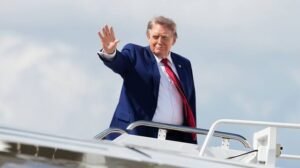
Reporting identified the smaller aircraft as a C-32A, a military version of the Boeing 757-200.
The U.S. Air Force describes the C-32 as a specially configured Boeing 757 designed for transporting senior American leaders. Its missions can include transportation for the vice president, first lady, Cabinet members, Congress and other senior officials.
The aircraft is significantly smaller than the Boeing 747-based presidential aircraft commonly associated with Air Force One.
That does not automatically mean the C-32A is an unsafe aircraft.
The Air Force specifically describes the C-32 as providing safe and reliable transportation for senior U.S. leaders. The aircraft also features advanced avionics and communications systems for high-priority government travel.
So when Trump said the smaller aircraft faced greater risk, his comment should not automatically be interpreted as a technical judgment that the C-32A itself was unsafe.
The context was the particular security situation surrounding his departure.
Why was Air Force One used as a decoy?
This is arguably the most striking part of the story.
Reports say Trump was publicly seen associated with the presidential aircraft while the actual presidential movement occurred separately. The Washington Post described the operation as a deception designed to conceal Trump’s real location.
That means the aircraft’s visibility served a purpose.
Anyone watching the airport, monitoring movements or attempting to determine Trump’s departure could potentially have been led toward the wrong conclusion.
For a president facing a credible security concern, delaying or confusing an adversary’s ability to identify the target can be strategically valuable.
Is Air Force One itself safer?
It is tempting to assume that the larger presidential aircraft must always be the safest option.
That is too simplistic.
The U.S. presidential airlift fleet is built around specialized aircraft, security procedures, communications capabilities and mission planning. The aircraft used for presidential travel are not selected simply because one is bigger than another.
The Air Force has previously explained that presidential aircraft undergo extensive modifications to meet presidential operational requirements, including secure communications and defensive capabilities.
Therefore, aircraft selection depends on the circumstances.
Location, threat intelligence, timing, available security resources and the possibility of confusing an adversary can all influence the final plan.
What does Trump’s comment reveal?
Trump’s remarks provide an unusual glimpse into how presidential protection decisions are made.
He indicated that he followed the instructions given by the Secret Service and military officials rather than demanding a detailed explanation before changing aircraft.
That is significant because presidential security is built around constant risk assessment.
The Secret Service does not need to eliminate every possible threat. Its mission is to reduce risk through layered protection, intelligence, planning and rapid decision-making.
The Turkey operation illustrates how quickly a presidential travel plan can change when officials believe the threat environment has changed.
Was Trump actually in danger?
The careful answer is: official reporting indicates that U.S. authorities treated the threat seriously, but the complete details remain unavailable publicly.
Several reports described the intelligence as credible and connected it to Iran.
But readers should be cautious about dramatic claims circulating online.
There is a difference between:
- intelligence indicating a potential threat,
- officials deciding that a threat is credible,
- evidence that an attack was actively underway, and
- proof that an attacker had the capability and opportunity to strike.
Those are not interchangeable claims.
At this stage, the strongest responsible conclusion is that security officials considered the risk serious enough to justify an extraordinary change in Trump’s travel arrangements.
Why this matters beyond Trump
The incident is bigger than a single presidential flight.
Modern presidential protection increasingly depends on information management. Protecting a head of state is not simply about armor, aircraft defenses or armed personnel.
It can also involve controlling what potential adversaries believe.
If an adversary cannot confidently identify the president’s aircraft, the value of surveillance and targeting information can be reduced.
The Turkey operation therefore demonstrates an important principle of high-level security: sometimes the safest route is not the most obvious route.
Read More:- Anthropic Claude EU AI Watermarks: Did Claude Just Betray AI Users?
What remains unknown?
Several questions remain unanswered publicly.
The exact intelligence that triggered the decision has not been fully disclosed. The public also does not have a complete picture of how the Secret Service evaluated the risk or which agencies contributed to the assessment.
Some reports have provided additional details about the aircraft movements and deception strategy, but operational security information should be treated carefully unless confirmed by authoritative sources.
For readers, the best approach is to distinguish Trump’s confirmed comments from details attributed to unnamed officials or intelligence reporting.
Trump Turkey Plane Swap: Frequently Asked Questions
1. Why did Trump change planes in Turkey?
Trump said the Secret Service and military authorities instructed him to change aircraft because of a threat. Reports linked the security concern to Iran.
2. What aircraft did Trump reportedly use?
Reports identified the smaller aircraft as a C-32A, a U.S. military Boeing 757-based aircraft used for senior government transportation.
3. Was Air Force One used as a decoy?
Multiple reports said the presidential aircraft was used as part of a deception operation intended to make Trump’s actual location harder to identify.
4. Was the C-32A unsafe?
No public evidence establishes that the C-32A itself was unsafe. The U.S. Air Force describes the aircraft as a safe and reliable platform for transporting senior U.S. leaders.
5. Was Trump targeted by Iran?
Reports have linked the security concern to an Iranian threat, but the full intelligence behind the decision has not been publicly released. It is therefore more accurate to say that U.S. officials reportedly assessed an Iranian-linked threat rather than claim that an attack against Trump was definitely underway.
6. Why would the Secret Service use a decoy?
A decoy can create uncertainty about the president’s actual location. In a high-threat environment, confusing potential attackers can make it more difficult to plan an attack.
7. Did Trump know about the threat?
Trump said he was told by security officials to change planes and indicated that he did not seek detailed information about the threat before following their instructions.
8. When did the incident happen?
The aircraft operation occurred during Trump’s return from the NATO summit in Turkey. The summit itself took place in Ankara in July 2026.
9. Does Air Force One always carry the president?
The term “Air Force One” technically refers to the U.S. Air Force aircraft using that call sign while the president is aboard. Presidential travel can involve multiple aircraft and complex security arrangements.
10. What can readers learn from the Trump plane incident?
The main lesson is that presidential travel security is not simply about using the biggest or most recognizable aircraft. Security officials can change routes, aircraft and procedures when intelligence indicates that the risk environment has changed.
The Bottom Line
The Trump plane swap in Turkey was an extraordinary example of how presidential security can operate behind the scenes.
Trump says the Secret Service and military authorities directed him to change aircraft because of a threat. Multiple reports have connected the operation to an Iranian security concern, while the presidential aircraft was reportedly used as a decoy to obscure Trump’s real departure.
The most important detail is also the easiest to overlook: not every dramatic claim surrounding the incident has been independently established.
What is clear is that U.S. security officials considered the situation serious enough to alter the president’s travel arrangements. The use of a C-32A and a deceptive aircraft movement demonstrates how presidential protection can depend as much on uncertainty and intelligence as it does on aircraft technology.
For now, the unanswered questions are likely to remain part of the story until more information is officially released.