
Strait of Hormuz Crisis: Why Shipping Is Almost Stopping
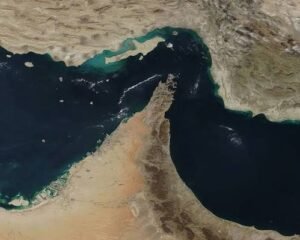
The Strait of Hormuz is at the center of a rapidly escalating U.S.-Iran crisis after two more commercial vessels were attacked and shipping activity through the strategic waterway dropped sharply.
The latest development comes as Washington says it can maintain a naval blockade of Iran indefinitely and is preparing additional economic measures against Tehran.
For global energy markets, the question is no longer simply whether ships can pass through the Strait of Hormuz.
The bigger question is how long the disruption can continue before it creates a much wider economic shock.
Reuters reported on August 14 that transit through the Strait of Hormuz appeared to grind toward a near standstill after two vessels were attacked. The attacks came as efforts to revive a ceasefire agreement remained stalled.
What Is Happening in the Strait of Hormuz?
The Strait of Hormuz is experiencing a dramatic reduction in commercial shipping as tensions between the United States and Iran continue to rise.
According to Kpler data cited by Reuters, nine commodity vessels passed through the waterway on Thursday. That was higher than the five recorded on Wednesday, but still below the August daily average of 12. No visible crossings were recorded early Friday, although vessels with transponders switched off may not appear in tracking data.
That does not necessarily mean every ship has stopped moving.
It does mean that commercial shipping activity has fallen to unusually low levels.
Before the current war, more than 130 ships a day were passing through the waterway, according to Reuters.
That difference explains why the Strait of Hormuz crisis is attracting attention far beyond the Middle East.
Why Is the Strait of Hormuz So Important?
The Strait of Hormuz connects the Persian Gulf with the Gulf of Oman and the Arabian Sea.
Its importance comes from its role in global energy transportation.
Before the conflict, roughly one-fifth of the world’s oil and liquefied natural gas shipments moved through the waterway, making the Strait of Hormuz one of the most strategically important energy corridors on Earth.
That means a prolonged disruption could affect much more than shipping companies.
It could influence:
- Crude oil prices
- Gasoline costs
- Freight rates
- Marine insurance
- Airline expenses
- Manufacturing
- Global inflation
- Energy security
The longer the Strait of Hormuz remains disrupted, the more difficult it becomes for markets to treat the crisis as a short-term event.
What Happened to the Two Ships?
Two vessels belonging to Abu Dhabi National Oil Company, or ADNOC, were attacked while transiting the Strait of Hormuz on Thursday evening, according to the UAE’s state news agency.
The UAE government blamed Iran for the attacks.
No injuries were reported, and ADNOC said the situation had been brought under control. Iran had not immediately commented on the allegations when Reuters published its report.
The incidents are particularly significant because they involve commercial vessels operating in one of the world’s most important energy routes.
They also increase the security concerns facing other shipping companies considering whether to enter the Strait of Hormuz.
Is the Strait of Hormuz Completely Closed?
Not exactly.
This distinction is important.
The Strait of Hormuz has not necessarily become a completely impassable waterway for every vessel. Tracking data shows that some commodity ships have continued to transit.
However, traffic has fallen dramatically compared with levels seen before the war.
Reuters reported that nine commodity vessels crossed on Thursday, while more than 130 ships had previously been passing through the waterway each day before the conflict.
So the most accurate description is a severe shipping disruption, rather than claiming that every vessel has been completely blocked.
Why Is the U.S. Increasing Pressure on Iran?
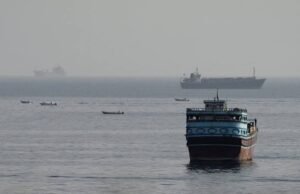
Washington is combining military pressure with a broader economic strategy.
U.S. Defense Secretary Pete Hegseth said the U.S. military has enough capability to maintain its naval blockade of Iran indefinitely by rotating ships in and out of the region.
Treasury Secretary Scott Bessent has also warned that Washington plans additional financial measures against Iran.
Bessent said further announcements could come next week and described the planned economic pressure as measures unlike those previously used against a country.
That makes the Strait of Hormuz more than a shipping story.
It has become a central part of the economic pressure campaign between Washington and Tehran.
What Does the Strait of Hormuz Crisis Mean for Oil?
Oil markets are closely watching every development involving the Strait of Hormuz.
When a major energy route becomes harder or more dangerous to use, traders typically begin pricing in additional supply risk.
But oil prices do not move in only one direction.
Demand expectations, inventories and alternative supplies can also push prices lower.
Reuters reported on August 13 that Brent crude settled at $87.07 per barrel and U.S. West Texas Intermediate at $81.25, with weak demand expectations and a major increase in U.S. crude inventories weighing on prices.
That creates an unusual market situation.
The Strait of Hormuz is creating a major geopolitical supply risk, while other market forces are simultaneously limiting some of the upward pressure on crude prices.
Could the Strait of Hormuz Crisis Raise Gas Prices?
It could.
But the timing and size of any impact would depend on how long the disruption continues and how much alternative crude becomes available.
If shipping remains heavily restricted, energy companies and refiners could face higher transportation, insurance and sourcing costs.
Those costs can eventually work their way through supply chains.
For American consumers, that could mean pressure on gasoline, diesel, transportation and other energy-related expenses.
However, it would be premature to claim that the current Strait of Hormuz crisis automatically guarantees a specific gasoline price.
Markets can change quickly as supply, demand and diplomatic conditions change.
What Is Iran Saying About the Strait of Hormuz?
The United States and Iran are making competing claims about control of the waterway.
U.S. President Donald Trump has said the United States has “total control” of the Strait of Hormuz.
Iranian officials have rejected that claim.
Reuters reported that Hossein Taeb, the recently appointed head of Iran’s Basij paramilitary organization, said the Strait of Hormuz was under Iran’s control and management.
Iran has also said the waterway will not fully reopen unless its conditions are met, including the removal of economic sanctions and the release of frozen Iranian assets.
The conflicting claims add another layer of uncertainty for commercial shipping.
Why Shipping Companies Are Worried
A shipping company does not need an official closure before deciding to avoid a route.
Operators have to consider:
- Vessel security
- Crew safety
- Insurance costs
- Cargo delays
- Potential attacks
- Port restrictions
- Changing military conditions
The latest Strait of Hormuz attacks increase those risks.
Even if some vessels can technically pass through the waterway, companies may decide that the financial and security risks are too high.
That can reduce traffic without a formal closure being announced.
How Could the Strait of Hormuz Affect Americans?
The Strait of Hormuz may be thousands of miles from the United States, but its importance is global.
Oil is traded internationally, so disruptions in a major producing region can influence energy prices elsewhere.
A prolonged crisis could potentially affect:
Gas prices: Higher crude and transportation costs can eventually put pressure on gasoline.
Air travel: Airlines are highly sensitive to jet fuel prices.
Shipping: Higher fuel and insurance expenses can raise freight costs.
Manufacturing: Energy is an important input for many industries.
Inflation: Higher transportation and energy expenses can spread through supply chains.
The size of the impact depends heavily on how long the Strait of Hormuz disruption lasts.
Could the Strait of Hormuz Crisis Become a Bigger Global Problem?
That is one of the biggest concerns facing markets.
A short disruption could eventually ease if diplomatic negotiations resume.
A prolonged disruption would be much more difficult.
The risk becomes even greater if additional commercial vessels are attacked or if the conflict expands into other parts of the Middle East.
Reuters has also reported concerns about attacks involving Iran-backed groups elsewhere in the region, adding to fears that the conflict could widen.
For that reason, investors are watching the Strait of Hormuz alongside developments in oil production, shipping and regional diplomacy.
What Happens Next in the Strait of Hormuz?
There are several possible paths from here.
1. Shipping Begins to Recover
If security conditions improve, commercial operators could gradually return to the Strait of Hormuz.
That could reduce some of the pressure on energy markets.
2. The Disruption Continues
If attacks and competing military claims continue, shipping companies could remain cautious.
That would keep pressure on global energy transportation.
3. Diplomatic Talks Restart
A meaningful U.S.-Iran agreement could change the situation quickly.
Lower geopolitical risk could encourage shipping companies to reconsider the route.
4. The Conflict Escalates
More attacks on commercial vessels or energy infrastructure could produce a much larger shock.
That is the scenario markets are trying to avoid.
Strait of Hormuz Crisis: What Should You Watch Now?
For anyone following the Strait of Hormuz, several indicators matter most over the next few days.
Watch the number of vessels actually crossing the waterway.
Watch for additional attacks on commercial ships.
Watch Brent crude and U.S. crude prices.
Watch new U.S. sanctions and economic measures against Iran.
And watch for any breakthrough—or further collapse—in U.S.-Iran negotiations.
These developments will help determine whether the Strait of Hormuz crisis remains a severe shipping disruption or develops into a much broader global energy problem.
Read More:- Chalkie AI: The Teacher Tool You May Be Missing
The Bottom Line on the Strait of Hormuz
The Strait of Hormuz has reached a critical moment.
Two more commercial vessels were attacked, shipping traffic has fallen sharply, and Washington is warning that its naval blockade and economic pressure campaign against Iran could continue indefinitely.
At the same time, the United States and Iran continue making competing claims over control of the waterway, while stalled diplomacy leaves few immediate signs of a quick resolution.
The biggest question now is not simply whether another ship crosses the Strait of Hormuz.
It is whether the disruption lasts long enough to change global energy prices, shipping patterns and economic expectations.
For now, the situation remains fluid.
But every additional day of severely reduced traffic makes the Strait of Hormuz harder for global markets to ignore.
Frequently Asked Questions About the Strait of Hormuz
1. What is happening in the Strait of Hormuz?
Shipping through the Strait of Hormuz has fallen sharply amid escalating U.S.-Iran tensions and attacks involving commercial vessels.
2. Why is the Strait of Hormuz important?
The Strait of Hormuz is a critical global energy route. Before the conflict, roughly one-fifth of global oil and LNG shipments passed through the waterway.
3. Is the Strait of Hormuz completely closed?
The Strait of Hormuz has experienced a severe reduction in shipping, but tracking data has still shown some commodity vessels transiting the waterway.
4. Why is shipping slowing in the Strait of Hormuz?
Security concerns, attacks on vessels, competing U.S. and Iranian claims and the broader conflict have made commercial shipping through the Strait of Hormuz significantly riskier.
5. Could the Strait of Hormuz crisis increase gas prices?
A prolonged disruption could put upward pressure on crude oil and transportation costs, potentially affecting gasoline prices. However, demand and inventory conditions can offset some of that pressure.
6. What is the U.S. doing in the Strait of Hormuz?
The U.S. is maintaining a naval blockade against Iranian shipping and has said it can sustain the operation indefinitely. Washington is also preparing additional economic pressure against Iran.
7. Is Iran controlling the Strait of Hormuz?
The United States and Iran have made competing claims over control of the Strait of Hormuz. Iran says it controls and manages the waterway, while President Trump has claimed the United States has total control.
8. What happens if the Strait of Hormuz remains disrupted?
A prolonged disruption could increase shipping and insurance costs, affect global energy markets and potentially put additional pressure on fuel prices and inflation.
9. What should investors watch next?
Investors should watch Strait of Hormuz shipping volumes, crude oil prices, additional attacks, U.S. sanctions and any progress in U.S.-Iran negotiations.
10. Why does the Strait of Hormuz matter to the U.S.?
Although the waterway is in the Middle East, its importance to global oil and gas transportation means prolonged disruption can influence energy prices and supply chains worldwide.