
StoryGame AI: You Can Turn One Simple Idea Into a Playable Story — Here’s How
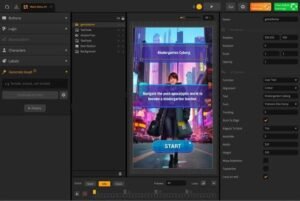
What if you could start with nothing more than a story idea and turn it into an interactive game?
That’s the promise behind the growing world of StoryGame AI.
Instead of spending weeks learning traditional game-development tools before seeing an idea come to life, AI-powered storytelling tools can help creators generate characters, dialogue, story branches and interactive scenes much faster.
One example is StoryGames.AI, which Buildbox describes as a tool for creating visual-novel games by answering questions about the story, characters, obstacles and other game elements. It can generate a multi-chapter visual novel with AI-generated artwork and interactive choices.
And that’s why this technology is attracting attention from people who have always wanted to make games but never learned how to code.
The interesting question isn’t whether AI can write a story.
It can.
The bigger question is:
Can AI turn your idea into something people can actually play?
Why StoryGame AI Is Different From a Normal AI Chatbot
A chatbot can write a story.
That’s nothing new.
But an AI-powered story-game workflow goes further.
Instead of producing one fixed ending, the experience can be designed around:
- Characters
- Choices
- Multiple paths
- Dialogue
- Scenes
- Conflict
- Endings
- Visual elements
- Player decisions
That changes the experience from simply reading a story to participating in one.
Interactive AI storytelling projects already demonstrate this approach, including games where player decisions influence the developing plot and multiple endings are possible.
The Biggest Opportunity: You Don’t Need a Perfect Idea
This may be the most exciting part for beginners.
You don’t need a 50-page game design document.
Start with something simple:
“A teenager discovers that every photo taken with an old camera shows something that hasn’t happened yet.”
That’s enough to begin.
AI can help turn that basic concept into:
Main character → mystery → supporting characters → choices → consequences → ending.
The creator still needs to make important creative decisions.
But AI can dramatically reduce the amount of blank-page work.
How to Use StoryGame AI
The exact workflow depends on the specific platform you’re using, but a strong AI-game workflow looks like this.
Step 1: Start With the Core Idea
Write your story in one or two sentences.
Don’t worry about making it perfect.
Example:
A college student receives messages from their future self warning them about an event that hasn’t happened yet.
Step 2: Build the Main Character
Give the protagonist:
- Name
- Age
- Personality
- Goal
- Fear
- Strength
- Weakness
- Secret
This gives the AI something consistent to work with.
Step 3: Create the Conflict
A story becomes interactive when decisions matter.
Ask:
What does the character want?
What’s stopping them?
What happens if they fail?
Step 4: Add Choices
Instead of:
The character enters the room.
Create:
A. Open the mysterious box.
B. Search the room first.
C. Leave before anyone notices.
Now the player has agency.
Step 5: Give Every Choice a Consequence
This is critical.
A weak AI game gives players three choices that eventually lead to the same scene.
A better game makes choices matter.
For example:
Open the box → gain information but trigger an alarm.
Search the room → discover a hidden clue but lose time.
Leave → stay safe but miss the evidence.
That’s what makes an interactive story feel like a game.
A Powerful StoryGame AI Prompt You Can Copy
Try this structure with an AI storytelling/game-generation tool:
Create an interactive narrative game based on this concept: [YOUR IDEA].
Genre: [HORROR / SCI-FI / MYSTERY / ROMANCE / FANTASY]
Main character: [CHARACTER]
Setting: [SETTING]
Goal: [GOAL]
Main conflict: [CONFLICT]
Create meaningful player choices where different decisions produce different consequences. Avoid meaningless choices that lead to the same outcome. Maintain character consistency and story continuity. Create multiple possible endings and make each ending depend on earlier player decisions.
That’s much stronger than simply asking:
“Make me a game.”
StoryGame AI Could Be Huge for Horror
If you’re targeting gamers, horror is an especially interesting category.
Imagine:
You wake up alone in an abandoned hospital.
The AI controls:
- The environment
- Characters
- Clues
- Threats
- Dialogue
- Decisions
But the player determines what happens.
Every playthrough can potentially feel different.
That’s one of the biggest attractions of AI-generated interactive storytelling.
Mystery Games Could Become Even More Interesting
Mystery is another perfect use case.
Instead of giving every player the same investigation, AI can potentially create dynamic clues and conversations around a central narrative.
For example:
A detective investigates a murder where every suspect remembers the same night differently.
Now the player has to decide:
Who should you trust?
Which clue matters?
Who should you confront?
What evidence should you hide?
The story becomes a decision-making experience rather than a passive narrative.
The Technology Is Already Moving Beyond Simple Text
AI-generated interactive experiences are already experimenting with images, narration and branching story structures.
For example, some current AI interactive-fiction projects combine generated stories with AI-generated imagery, while other experimental projects use AI models as the engine behind text-based adventures.
That means the future isn’t necessarily:
Text → Story
It could increasingly become:
Idea → World → Characters → Images → Dialogue → Choices → Playable Experience
But There Is a Problem With AI-Generated Games
AI can generate a lot.
That doesn’t mean it automatically generates something good.
The biggest problems can include:
Repetition
Characters may start sounding similar.
Continuity Errors
A character can suddenly forget something that happened earlier.
Weak Choices
Different decisions may lead to nearly identical outcomes.
Generic Characters
Without strong direction, characters can feel flat.
Unpredictable Storytelling
AI can sometimes introduce details that weren’t part of the original concept.
That’s why human creative direction still matters.
How to Make an AI Story Feel Less Generic

Give the AI constraints.
Instead of:
Create a horror story.
Try:
Create a psychological horror game set inside an abandoned subway station in Chicago. The protagonist is a 27-year-old night-shift photographer who hears announcements using their own voice. Keep the horror psychological rather than gore-focused. Every major choice must create a meaningful consequence.
Specificity creates identity.
StoryGame AI Isn’t Just for Professional Developers
That’s potentially the biggest opportunity.
A traditional game-development workflow can require knowledge of:
- Game engines
- Programming
- 3D or 2D assets
- Animation
- UI design
- Audio
- Level design
AI can reduce some of those barriers.
That doesn’t eliminate development work.
But it can make experimentation much faster.
A writer can experiment with interactive storytelling.
A designer can test game concepts.
A beginner can prototype an idea.
An indie developer can create a rough version before investing heavily in production.
Can StoryGame AI Really Replace Game Developers?
Not completely.
At least not based on what these tools currently demonstrate.
AI can assist with content generation and prototyping.
But polished games still require:
- Creative direction
- Testing
- Design
- Editing
- Balancing
- User experience
- Technical implementation
- Quality control
The strongest future may not be AI instead of developers.
It may be:
Developers + AI working together.
The Biggest Change May Be Who Gets to Create Games
For decades, game creation required specialized technical skills.
AI is beginning to change that barrier.
Someone with a strong story idea but limited coding experience can now experiment with interactive narratives much more easily.
That’s a major cultural shift.
The number of people who can prototype a game could become dramatically larger.
And that’s where StoryGame AI becomes interesting.
Read More:- Bitcoin News: Whales Just Bought 43,000 BTC — So Why Is Bitcoin Still Stuck Below $65K?
What Should Beginners Create First?
Don’t start with an open-world RPG.
Start small.
Good first project:
One protagonist
One location
Three major choices
Two or three endings
10–15 minutes of gameplay
Once the basic structure works, expand it.
This makes it much easier to identify problems before the project becomes too complicated.
The Future of StoryGame AI
The technology is moving toward a fascinating possibility.
Instead of downloading a game with one fixed storyline, imagine a game that creates parts of the narrative around you.
Your decisions influence the characters.
Characters remember what you’ve done.
The environment changes.
The story adapts.
Different players experience different outcomes.
That’s the long-term promise of AI-driven interactive storytelling.
And we’re already seeing early experiments in that direction.
Final Verdict
StoryGame AI isn’t interesting simply because AI can write stories.
The real opportunity is turning storytelling into something interactive.
A creator can start with a simple concept, define characters and conflicts, create meaningful choices and use AI to help develop the narrative.
Tools such as StoryGames.AI are already designed around this kind of visual-novel creation workflow, while other AI interactive-fiction projects are experimenting with branching stories, generated visuals and adaptive gameplay.
The technology still has limitations.
AI can produce repetitive writing, continuity problems and weak choices if the creator doesn’t provide enough direction.
But for beginners, writers and indie creators, the barrier to experimenting with interactive storytelling is getting lower.
And that leads to the biggest question: