
Humanize AI: 5 Powerful Truths About AI Humanizers

AI-generated writing is becoming harder to distinguish from human writing, and humanize AI tools are now part of that growing conversation. These tools rewrite AI-generated text to make it sound more natural, but recent research suggests their results are far more complicated than simply making AI text “undetectable.”
Here are five important things to know about AI humanizers in 2026.
1. Humanize AI Tools Actually Change Writing Patterns
AI humanizers generally rewrite sentences, adjust wording and modify stylistic patterns. The goal is to make generated text resemble natural human writing.
Research published in 2026 found that humanized and hybrid text can reduce the performance of some AI detectors, although results vary between detection systems.
2. AI Humanizers Do Not Guarantee “Undetectable” Text
One of the biggest misconceptions about humanize AI tools is that they can permanently make AI writing impossible to detect.
That isn’t realistic. AI detectors are continually updated, while humanizers also evolve. Recent research shows an ongoing race between detection systems and methods designed to alter AI-generated text.
3. Detector Results Are Not Absolute Proof
An AI detector score should not automatically be treated as proof that a person used AI.
A recent 2026 study found that detector outputs require contextual interpretation rather than a simple human-versus-AI yes/no decision. False positives and false negatives remain important concerns.
4. Human Editing Still Matters
Using an AI humanizer is not the same as having a human writer edit content.
Human editing can add original experiences, accurate details, opinions, examples and a genuine writing voice. Recent reporting also highlights how humanizers can leave recognizable AI-style patterns behind even after rewriting.
5. AI Humanization Is Becoming a Bigger Technology Battle
The technology behind AI detection and text humanization is evolving quickly. Research published in 2026 has already demonstrated techniques that can make AI-generated text harder for some black-box detectors to identify.
That means there is unlikely to be one permanent humanize AI solution that works against every detector and every future AI model.
Do AI Humanizers Actually Work?
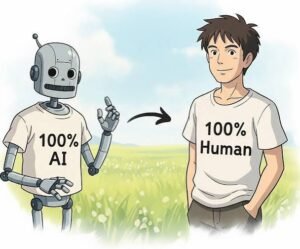
Yes, they can change the characteristics of AI-generated text and make some detection systems less reliable, but they do not guarantee that content will become undetectable. Results depend on the humanizer, detector, model, writing style and evaluation method.
For publishers and writers, the better approach is to use AI as a writing assistant while adding genuine human research, judgment and editing rather than relying entirely on an AI humanizer.
Bottom Line
Humanize AI technology is becoming an important part of the wider AI-content debate. The latest research suggests that humanization can affect detector performance, but neither humanizers nor AI detectors should be treated as infallible.
The real value of human-written content remains originality, expertise, accuracy and a meaningful perspective—not simply whether a detector produces a particular score.
Read More:- Google AI Mode: 7 Amazing Ways to Search Smarter
FAQ
1.What is Humanize AI?
Humanize AI generally refers to tools that rewrite AI-generated text to make its wording, sentence structure and style appear more natural.
2.Do AI humanizers actually work?
Yes, they can alter AI-generated text and affect the performance of some AI detectors, but they cannot guarantee that content will always avoid detection.
3.Is AI humanizer text always undetectable?
No. Detection performance varies by tool, model, text type and detector. Some humanized content can still be identified.
4.Is an AI detector score proof that someone used AI?
No. Detector results should be interpreted in context because false positives and false negatives can occur.
5.Should writers rely on AI humanizers?
AI humanizers can assist with rewriting, but writers should still fact-check, edit and add original ideas and expertise rather than depending on them as a guarantee of human authorship.