
FDA Chlorthalidone Dissolution Testing Recall: 25,000+ Bottles Removed in Major Quality Investigation
Executive Summary / AI Overview
-
Nationwide Escalation: The FDA chlorthalidone dissolution testing recall has expanded following a second major voluntary action by manufacturer Inventia Healthcare Limited, bringing the total count of recalled blood pressure medication bottles past 25,000.
-
Core Quality Defect: Regulatory testing confirmed that affected lots failed dissolution specifications, meaning the tablets fail to disintegrate and dissolve correctly in the gastrointestinal tract, directly compromising therapeutic bioavailability.
-
Class II Classification: The U.S. Food and Drug Administration assigned a Class II recall FDA status to the affected batches, warning that reduced drug efficacy could lead to temporary or medically reversible adverse health consequences.
-
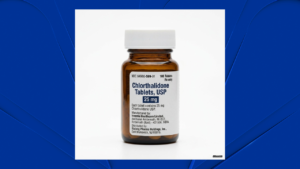
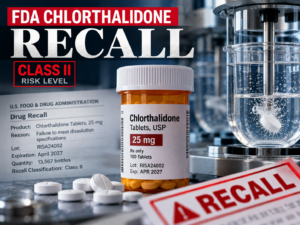
Key Product Identifiers: Patients taking chlorthalidone 25 mg tablets distributed by Rising Pharma Holdings Inc. must check their packaging for NDC 64980-599-01 and batch numbers RISA24001, RISB24002, or RISA24002 with an expiration date of April 2027.
-
Crucial Medical Guidance: Health authorities urge patients not to cease taking their blood pressure medication abruptly; doing so presents immediate risks of hypertensive spikes, stroke, and cardiovascular events. Patients should immediately contact their prescribing doctor or dispensing pharmacist to arrange a safe generic replacement.
Section 1: Introduction & Breaking Context
The U.S. Food and Drug Administration (FDA) has heightened scrutiny across the pharmaceutical supply chain following a widespread fda chlorthalidone dissolution testing recall involving tens of thousands of bottles of crucial hypertension medication. Chlorthalidone, a long-acting thiazide-like diuretic widely prescribed to millions of Americans to manage high blood pressure and fluid retention, is facing rigorous regulatory enforcement after multiple manufacturing lots failed standard laboratory dissolution tests. The affected products, manufactured in India by Inventia Healthcare Limited and distributed across the United States by Rising Pharma Holdings, failed to satisfy federal dissolution specifications. This manufacturing flaw prevents the active drug from releasing properly into the bloodstream, posing severe underlying clinical risks for patients relying on consistent daily blood pressure control.
The scope of this multi-stage blood pressure medication recall underscores systemic vulnerabilities in global pharmaceutical manufacturing and quality oversight. The initial enforcement action began in June when 11,460 bottles were pulled from market channels due to dissolution deficiencies. The ongoing investigation intensified significantly in September when an additional 13,567 bottles were added to the recall roster under FDA recall numbers D-0610-2026 and D-0852-2026, officially pushing the affected volume past 25,000 total 100-tablet and 1,000-tablet bottles.
Regulatory bodies categorize this event as a Class II recall, a classification reserved for situations where exposure to a non-compliant pharmaceutical product may cause temporary or medically reversible adverse health consequences. While the probability of immediate, catastrophic harm is considered remote by FDA standards, the silent nature of uncontrolled high blood pressure—often termed the “silent killer”—means that reduced medication bioavailability failure can quietly expose patients to dangerous spikes in blood pressure. Over extended periods, sub-therapeutic dosing caused by improper dissolution increases the long-term risk of myocardial infarction, ischemic stroke, progressive chronic kidney disease, and congestive heart failure. Consequently, federal regulators, cardiologists, and patient advocacy groups are moving rapidly to inform the public, audit distribution pipelines, and secure replacement inventory nationwide.
Section 2: In-Depth Background & Historical Context
To fully understand the critical nature of the fda chlorthalidone dissolution testing recall, one must examine the physiological role of chlorthalidone within cardiovascular medicine and the history of quality assurance enforcement governing generic oral solid doses. First synthesized in the mid-20th century, chlorthalidone became a cornerstone of modern antihypertensive therapy. Unlike short-acting diuretics such as hydrochlorothiazide, chlorthalidone boasts an extended half-life ranging from 40 to 60 hours, offering smooth, round-the-clock reduction of arterial vascular resistance and systemic fluid volume. Clinical trial benchmarks, including the landmark Antihypertensive and Lipid-Lowering Treatment to Prevent Heart Attack Trial (ALLHAT), historically established chlorthalidone as a first-line treatment for essential hypertension due to its proven efficacy in preventing major cardiovascular events.
However, the efficacy of any oral tablet hinges fundamentally on its physical degradation within the human digestive system. Dissolution testing measures the rate and extent to which an active pharmaceutical ingredient absorption profile is achieved when a solid dosage form (such as a compressed tablet) dissolves in a liquid medium simulating human stomach acid and intestinal fluids. When a generic drug manufacturer compresses active pharmaceutical ingredients (APIs) alongside binders, fillers, and lubricants, the resulting tablet formulation must disintegrate within strict timeframes. If a batch exhibits substandard dissolution, the tablet may pass through the gastrointestinal tract largely intact or dissolve too slowly, preventing the body from absorbing the required dosage.
| Event Date | Entity / Agency Involved | Regulatory Action / Announcement | Impacted Batches & Quantities | Primary Cause / Reason Cited |
| June 5, 2026 | Inventia Healthcare Ltd / FDA | Initial voluntary recall initiated in the U.S. market | 11,460 bottles (100 & 1,000 tablet bottles) | Failed dissolution specifications during stability testing |
| July 3, 2026 | FDA Regulatory Enforcement | Official posting of FDA Recall Number D-0610-2026 | Initial 11,460 bottles classified under Class II | Dissolution rate failure under standard laboratory USP protocols |
| September 3, 2026 | Inventia Healthcare Ltd | Secondary recall expansion initiated | 13,567 bottles (25 mg, 100-tablet bottles) | Recurrent failure in meeting dissolution specifications |
| September 17, 2026 | U.S. FDA Enforcement Division | Formal Class II designation assigned to second batch | Total recalled volume exceeds 25,000 bottles | Impaired tablet disintegration threatening therapeutic dose delivery |
| September 28–29, 2026 | FDA & Public Health Alerts | Nationwide media alert and medical provider advisories issued | Affected Lot: RISA24002 (Exp: April 2027) | Impaired drug absorption risking severe hypertension treatment risk |
Over the past decade, globalized pharmaceutical supply networks have faced heightened regulatory scrutiny regarding overseas manufacturing plants. With a substantial portion of generic pharmaceuticals consumed in the United States produced in international hubs such as India and China, the FDA has progressively tightened its surveillance programs. Dissolution testing failures are particularly concerning to regulatory inspectors because they often point to deeper systemic flaws in tablet compression parameters, moisture content control, binder composition, or raw material consistency during bulk chemical blending.
For more free AI tools, visit now: https://freeaitools4u.com/
Section 3: Strategic & Core Analysis
The Technical Mechanics Behind the FDA Chlorthalidone Dissolution Testing Recall
To appreciate why the fda chlorthalidone dissolution testing recall generated widespread emergency alerts across health systems, one must examine the precise laboratory metrics required by the United States Pharmacopeia (USP). Standard USP dissolution protocols require that a designated percentage of the labeled drug substance—typically 75% to 80%—must completely dissolve within a specified timeframe (usually 30 to 45 minutes) when agitated in standard dissolution apparatuses mimicking gastric pH environments.
During routine ongoing stability testing—a mandatory quality process where samples from commercial manufacturing batches are stored at varied temperatures and humidity levels over time—specific lots of chlorthalidone 25 mg tablets produced by Inventia Healthcare Limited failed to meet these quantitative dissolution thresholds.
[Solid Tablet Compression] ➔ [Swallowed by Patient] ➔ [Stomach Acid Exposure]
                                                                │
                                      ┌─────────────────────────┴─────────────────────────┐
                                      ▼                                                   ▼
                         [Normal USP Dissolution]                             [Failed Dissolution Defect]
                                      │                                                   │
                         [Complete Active API Release]                       [Tablet Remains Intact / Slow Release]
                                      │                                                   │
                         [Optimal Blood Bioavailability]                     [Sub-Therapeutic Drug Absorption]
                                      │                                                   │
                         [Controlled Blood Pressure]                         [Uncontrolled Hypertensive Spikes]
When a generic drug fails dissolution testing, the clinical consequence is not chemical toxicity, but rather therapeutic failure. If the physical tablet matrix resists breaking down, the active substance passes through the small intestine—the primary site of drug absorption—without entering systemic circulation. Consequently, a patient taking a 25 mg pill may effectively absorb only a fraction of that dose, leading to unrecognized treatment failure.
Deep Regulatory Breakdown: Inventia Healthcare Limited and Rising Pharma Holdings
The supply chain chain of custody for the recalled drug involves multiple corporate entities across continents. The manufacturing entity, Inventia Healthcare Limited, operates manufacturing facilities in India responsible for bulk synthesis, formulation, tablet compression, and primary packaging. The finished product is then imported and distributed throughout the U.S. pharmaceutical network by Rising Pharma Holdings, located in East Brunswick, New Jersey.
The primary regulatory concern identified during this fda chlorthalidone dissolution testing recall investigation is the recurrence of the defect across multiple production runs. The initial voluntary recall in June affected 11,460 bottles across batches RISA24001 and RISB24002. The secondary recall in September encompassed an additional 13,567 bottles under batch RISA24002 with an expiration date of April 2027 and National Drug Code (NDC) 64980-599-01. The recurrence of the exact same physical testing failure three months apart suggests systemic issues in manufacturing batch consistency, excipient quality control, or compression pressure calibration at the manufacturing plant level.
+-----------------------------------------------------------------------------------+
|                        SUPPLY CHAIN IDENTIFICATION MATRIX                         |
+------------------------------------+----------------------------------------------+
| Parameter                          | Specific Details                             |
+------------------------------------+----------------------------------------------+
| Manufacturing Entity               | Inventia Healthcare Limited (India)           |
| Primary U.S. Distributor           | Rising Pharma Holdings Inc. (NJ)              |
| Product Description                | Chlorthalidone Tablets, USP, 25 mg         |
| Primary NDC Number                 | 64980-599-01                             |
| Affected Lot Numbers               | RISA24001, RISB24002, RISA24002              |
| Expiration Dates Included          | April 2027                                  |
| FDA Recall Class                   | Class II Enforcement Action                   |
| Total Combined Quantity Recalled   | >25,027 Bottles (100 & 1,000 count)          |
+------------------------------------+----------------------------------------------+
Institutional Impact and Health System Disruptions
The classification of this event as a Class II recall FDA action triggers immediate protocol obligations for hospital systems, retail pharmacy chains (such as CVS, Walgreens, and Walmart), regional wholesalers, and long-term care facilities. Upon receiving formal regulatory notification under FDA recall numbers D-0610-2026 and D-0852-2026, healthcare facilities must quarantine all matching inventory instantly to prevent further dispensing.
However, the ripple effects extend far beyond inventory removal. Pharmacists must cross-reference automated dispensing records to identify patients who filled prescriptions matching NDC 64980-599-01 over the preceding months. This operational burden strains retail pharmacy networks, requiring manual patient outreach, insurance re-adjudication for replacement prescriptions, and coordination with prescribing physicians to secure immediate therapeutic alternatives.
Section 4: USA & Global Real-World Impact & Case Studies
USA Healthcare System Case Study: Managing Patient Vulnerability
In the United States, cardiovascular disease remains the leading cause of mortality, with over 115 million adults diagnosed with hypertension. The fda chlorthalidone dissolution testing recall directly impacts thousands of patients who rely on daily blood pressure stability. Consider the operational response within major hospital networks in states like Texas and Florida, where high volumes of the recalled product were distributed through regional retail chains.
When a patient takes a sub-potent antihypertensive tablet for weeks or months, the clinical presentation is insidious. Primary care physicians tracking patients with previously well-controlled blood pressure may suddenly observe unexplained systolic spikes exceeding 160 mmHg. In several clinical accounts reported during the recent recall cycle, physicians initially suspected patient non-compliance or disease progression, leading to unnecessary dose escalations or the addition of secondary medications. Only after regional pharmacy alerts were cross-referenced did clinics realize the underlying cause was a medication bioavailability failure stemming from physical tablet defects.
Clinical Alert Notice: “Abruptly discontinuing chlorthalidone can induce dangerous rebound hypertension. Healthcare providers must emphasize to patients that continuing affected medication while arranging an immediate pharmacy exchange is vastly safer than stopping therapy cold turkey.”
Global Implications: International Generic Manufacturing and Oversight
The broader global impact of the fda chlorthalidone dissolution testing recall highlights challenges in multi-jurisdictional drug supply chain regulation. Inventia Healthcare Limited, as an international supplier, exports pharmaceutical preparations to numerous international markets across North America, Europe, Asia, and Latin America. When the FDA identifies a major quality deviation in imported drugs, international health agencies—such as Health Canada, the European Medicines Agency (EMA), and the UK Medicines and Healthcare products Regulatory Agency (MHRA)—frequently initiate parallel audits of export facilities to determine if local supplies are similarly compromised.
This interconnected global environment means that quality control failures at a single manufacturing facility in India can trigger coordinated multi-national regulatory reviews. The repetitive nature of the dissolution failure across two distinct batches within a three-month window raises severe questions regarding global quality agreement enforcement between overseas Contract Development and Manufacturing Organizations (CDMOs) and domestic U.S. re-packagers or distributors like Rising Pharma Holdings.
Section 5: Step-by-Step Practical Implementation Guide
For patients, pharmacists, and medical practitioners navigating the fda chlorthalidone dissolution testing recall, immediate and systematic action is essential to mitigate health risks. Below is the step-by-step procedure for handling potentially affected prescription bottles.
                  [STEP 1: Check Prescription Label & Bottle]
                                       │
                                       ▼
                  [Is Manufacturer Inventia / Distributor Rising?]
                                       │
                         ┌─────────────┴─────────────┐
                         ▼                           ▼
                      [ YES ]                     [ NO ]
                         │                           │
                         ▼                           ▼
             [Check NDC & Batch Number]      [Medication Unaffected]
                         │                   [Continue Normal Use]
         ┌───────────────┴───────────────┐
         ▼                               ▼
 [Matches RISA24001,             [No Batch Match]
  RISB24002, RISA24002]                  │
         │                               ▼
         ▼                       [Continue Normal Use]
 [STEP 2: Contact Pharmacy Immediately]
         │
         ▼
 [STEP 3: Obtain Safe Replacement Pill]
         │
         ▼
 [STEP 4: Safely Dispose Recalled Lot]
Phase 1: Patient Verification Steps
-
Inspect the Physical Bottle Label: Locate the manufacturer or distributor name on your prescription container. Look specifically for Inventia Healthcare Limited or Rising Pharma Holdings.
-
Verify National Drug Code (NDC): Check for NDC 64980-599-01, which identifies 25 mg chlorthalidone formulations subject to this enforcement action.
-
Cross-Reference Batch and Lot Numbers: Check the printed lot number on the bottom or side of the amber pill bottle. The confirmed recalled lots include:
-
Batch RISA24001 (Initial June Recall)
-
Batch RISB24002 (Initial June Recall)
-
Batch RISA24002 (Exp: April 2027 – September Recall)
-
-
DO NOT Abruptly Cease Medication: Crucially, do not stop taking your prescribed daily dose without consulting a medical professional. Abrupt cessation of blood pressure medication poses an immediate and dangerous hypertension treatment risk, including sudden rebound high blood pressure.
Phase 2: Pharmacy and Healthcare Provider Execution Protocol
-
Quarantine Identified Stocks: Pharmacy staff must immediately remove all stock matching lot numbers RISA24001, RISB24002, and RISA24002 from active dispensing shelves and move them to secure quarantine bins.
-
Issue Replacement Generics: Pharmacists are authorized to dispense equivalent 25 mg chlorthalidone formulations produced by alternative, unaffected generic manufacturers (such as generic equivalents manufactured by alternative FDA-approved facilities) without requiring a new clinical prescription.
-
Report Adverse Events: Clinicians and patients should report any therapeutic failures, sudden blood pressure spikes, or adverse physical symptoms associated with recalled lots to the FDA MedWatch Adverse Event Reporting program online or by phone.
Section 6: Future Predictions & Economic Outlook
The commercial and regulatory fallout from the expanded fda chlorthalidone dissolution testing recall will likely reshape generic drug quality oversight over the coming years. Financially, the recall of more than 25,000 bottles imposes direct costs on Rising Pharma Holdings and Inventia Healthcare Limited, including product destruction expenses, reverse logistics liabilities, administrative pharmacy fees, and potential contractual penalties. Beyond direct immediate costs, repeated quality failures elevate the risk of comprehensive FDA Form 483 inspection observations, Warning Letters, or import alerts targeting overseas manufacturing plants.
+-----------------------------------------------------------------------------------+
|               FORECASTED IMPACT OF PHARMACEUTICAL QUALITY REFORMS                 |
+------------------------------------+----------------------------------------------+
| Industry Vector                    | 3-5 Year Strategic Projection                |
+------------------------------------+----------------------------------------------+
| FDA Inspection Frequency           | +40% increase in unannounced foreign audits  |
| Automated Dissolution Analytics    | Shift toward real-time NIR dissolution testing|
| CDMO Compliance Standards          | Stricter contractual indemnification clauses |
| Generic Market Concentration       | Consolidations favor high-compliance vendors |
+------------------------------------+----------------------------------------------+
From an industry-wide standpoint, this event accelerates a broader shift toward automated, real-time dissolution monitoring technology. Traditional dissolution testing relies on manual sampling and offline liquid chromatography at fixed post-production timeframes. Modern pharmaceutical engineering is increasingly turning toward Process Analytical Technology (PAT), utilizing Near-Infrared (NIR) spectroscopy and advanced computational modeling during tablet compression. These technologies allow manufacturers to detect dissolution anomalies instantaneously on the factory floor before defective drugs enter global commercial distribution pipelines.
Read More:- Minecraft Dungeons 2 Launch Guide: 10 Massive Features in Mojang’s Incredible ARPG Sequel
Section 7: FAQs for Voice Search & GEO Snippets
What caused the FDA chlorthalidone dissolution testing recall?
The fda chlorthalidone dissolution testing recall was triggered after batches of 25 mg chlorthalidone tablets failed USP laboratory dissolution specifications. This defect prevents the tablet from dissolving correctly in the gastrointestinal tract, leading to reduced drug absorption and compromised therapeutic effectiveness for patients managing high blood pressure.
Who manufactured and distributed the recalled blood pressure tablets?
The recalled tablets were manufactured in India by Inventia Healthcare Limited and distributed across the United States by Rising Pharma Holdings Inc. The affected products include 25 mg chlorthalidone tablets sold under NDC 64980-599-01 in 100-tablet and 1,000-tablet bottles.
Which specific lot numbers are included in the FDA recall?
The recall covers lot numbers RISA24001, RISB24002, and RISA24002. Recalled bottles carry an expiration date of April 2027. Patients should inspect their prescription bottle label or contact their dispensing pharmacy to check if their specific bottle matches these recalled batches.
Should I stop taking my blood pressure medication if it is part of the recall?
No, you should not stop taking your blood pressure medication abruptly. Stopping antihypertensive treatment suddenly can cause severe spikes in blood pressure, increasing the immediate risk of heart attack or stroke. Instead, contact your doctor or pharmacist immediately to receive a safe replacement prescription from an unaffected manufacturer.
What is a Class II FDA recall, and how dangerous is it?
A Class II recall FDA designation indicates that exposure to the defective product may cause temporary or medically reversible adverse health consequences. While serious immediate danger is unlikely, prolonged use of sub-potent blood pressure pills risks uncontrolled hypertension and related long-term cardiovascular complications.
Section 8: Strategic Actionable Verdict
The fda chlorthalidone dissolution testing recall serves as a stark reminder of the critical importance of rigorous physical quality control in generic drug manufacturing. When a blood pressure tablet fails basic dissolution criteria, the result is an invisible treatment breakdown that compromises patient safety. For the more than 25,000 bottles impacted across the United States, swift coordinated action between regulators, manufacturers, distributors, and pharmacy networks is vital to ensure zero gap in patient therapy.
Patients who discover they possess recalled chlorthalidone 25 mg tablets should remain calm, maintain their daily therapeutic routine as advised by public health officials, and promptly visit their local pharmacy for an equivalent replacement from an unaffected lot. Simultaneously, pharmaceutical manufacturers must treat recurring dissolution failures as an urgent signal to modernize analytical testing protocols and overhaul quality assurance frameworks, guaranteeing that every tablet delivered to consumers performs exactly as intended.