
Claude Protein Design: 14 of 15 Targets Worked in Lab Tests
Anthropic says Claude successfully designed functional protein binders against 14 of 15 tested targets, with the resulting designs independently produced and tested by Adaptyv Bio and Twist Bioscience. The results, published by Anthropic on August 18, 2026, offer a notable example of AI agents moving deeper into biological research.
What Happened With Claude Protein Design?
Anthropic tested Claude Mythos Preview and Claude Opus 4.8 on de novo protein binder design.
The models were given a protein-design workflow and used specialized computational tools to generate and evaluate candidate binders. The selected designs were then sent to external laboratories for physical testing.
Of the 15 targets evaluated, Anthropic says Claude produced confirmed binders for 14. Across 1,320 designs, 354 were confirmed to bind their intended targets, producing an overall hit rate of about 26.8%.
That compares with the 10% to 15% range Anthropic cites as typical for protein-design campaigns.
Why the 14-of-15 Result Matters
Protein binders are engineered to attach to specific target proteins. Designing them can be an important early step in biological research and drug development.
Traditionally, this work can require substantial computational expertise, candidate screening and optimization.
Anthropic’s experiment is interesting because Claude was used to coordinate much of that computational workflow rather than simply suggesting a handful of protein sequences.
The result does not mean AI has independently discovered new medicines. A successful protein binder is only one early component of a much longer drug-development process.
Claude’s Strongest Results
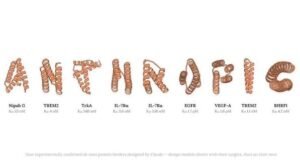
The reported performance varied depending on how the experiment was structured.
When Mythos Preview and Opus 4.8 worked across multiple targets simultaneously, Anthropic reported hit rates of 26.7% and 22.6%, respectively.
When Mythos Preview focused on individual targets in separate sessions, its overall hit rate reached 35.1%. Anthropic also reported particularly strong results on some individual targets.
This suggests that how an AI agent organizes a scientific workflow can matter almost as much as the underlying model.
Independent Laboratory Testing Is the Key Detail
The most important part of the announcement is that the proteins were not evaluated only by AI predictions.
Adaptyv Bio and Twist Bioscience independently produced and tested Claude’s designs in laboratory settings. That provides a more meaningful test than simply measuring whether a computer model predicts that a protein should work.
It also puts a clear limit on the claim: laboratory validation shows that some designs worked in the tested assays, not that they are safe or ready to become medicines.
What Claude Protein Design Could Mean for Drug Research
The larger opportunity is workflow automation.
If AI agents can increasingly connect scientific literature, protein-design software, computational screening and experimental data, researchers could potentially spend less time coordinating repetitive computational tasks.
Anthropic is also exploring AI-assisted analytical chemistry. In a separate experiment, the company reported that Claude Opus 5 analyzed NMR and LC-MS data and produced results matching a contract laboratory’s measurements.
Together, the experiments point toward a broader vision of AI as a research assistant that can work across multiple stages of scientific investigation.
What This Does Not Prove
The results should not be interpreted as proof that Claude can replace scientists or independently develop drugs.
Human experts still established the research setup, and wet-lab experiments remained essential. One target also failed to produce confirmed binders, showing that the system is not universally successful.
Read More:- Tesla FSD v15 AI Updates: Biggest Upgrade Coming?
The Bottom Line
The Claude protein design results are significant because they show an AI agent contributing to a real protein-engineering workflow whose outputs were subsequently tested in independent laboratories.
The 14-of-15 target result is impressive, but it is still an early research milestone—not autonomous drug discovery.
If this type of AI-assisted workflow continues to improve, the bigger breakthrough could be the ability to automate more of the computational work that currently sits between a scientific idea and a laboratory experiment.
Frequently Asked Questions
1. What did Claude achieve in protein design?
Anthropic says Claude designed functional protein binders against 14 of 15 tested targets, with external laboratories independently producing and testing the designs.
2. Which Claude models were used?
Anthropic used Claude Mythos Preview and Claude Opus 4.8 for the protein-design campaign.
3. Were the proteins tested in real laboratories?
Yes. Adaptyv Bio and Twist Bioscience independently produced and tested the AI-designed proteins.
4. Did Claude discover new drugs?
No. Protein binders are an early component of drug research and are not finished medicines.
5. Why is this important?
The experiment demonstrates how AI agents could potentially automate more of the computational work involved in early biological research.