
Chinese Cars in America: Trump’s Major Shift Sparks Auto Fight
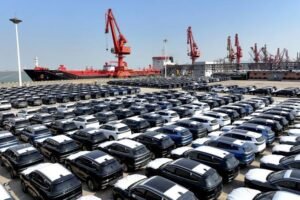
President Donald Trump has opened a new front in the U.S. auto debate by saying he would be comfortable with Chinese cars in America if Chinese automakers build factories in the United States and employ American workers. The comments could challenge Washington’s current approach to Chinese vehicle technology and intensify a growing fight over tariffs, national security and U.S. manufacturing.
Quick Answer
Chinese cars in America are not suddenly legal because of Trump’s comments. Trump said he would be open to Chinese automakers building vehicles inside the United States if they hire American workers, while opposing Chinese-made vehicles being produced in Mexico and shipped into the U.S. Existing federal restrictions and regulatory requirements still matter.
What Did Trump Say About Chinese Cars in America?
Trump said he would accept Chinese companies building car plants in the U.S. as long as those operations create American jobs. He pointed to Japan’s long-established U.S. manufacturing presence as an example of foreign automakers producing vehicles domestically with American workers.
The distinction is important: Trump is discussing domestic production, not simply allowing Chinese-built cars to enter the U.S. market.
5 Key Developments
- Trump opened the door to Chinese auto plants: He said Chinese automakers could build vehicles in America and employ U.S. workers.
- Mexico remains a red line: Trump said he opposes Chinese vehicles being built in Mexico and imported into the United States.
- Existing restrictions remain: Commerce rules restrict certain connected vehicles and technologies linked to China, including restrictions affecting Chinese manufacturers even when vehicles are produced in the U.S. for applicable model years.
- U.S. automakers are pushing back: The Alliance for Automotive Innovation is urging Congress to permanently restrict Chinese vehicles, citing competitive and security concerns.
- Ford is already under pressure: Transportation Secretary Sean Duffy recently criticized Ford over Chinese technology and partnerships, highlighting how politically sensitive China-related auto ties have become.
For more free AI tools, visit now: https://freeaitools4u.com/
Could Chinese Automakers Actually Build Cars in the U.S.?
Potentially, but Trump’s statement does not itself remove existing regulations. Any Chinese automaker seeking U.S. production would still need to navigate federal vehicle, technology, trade and national-security requirements.
The Commerce Department’s connected-vehicle rule is especially important. It restricts certain connected vehicles and covered software with a Chinese nexus, with major restrictions beginning for Model Year 2027 vehicles.
What Would Chinese Cars Mean for U.S. Drivers?
Chinese cars in America could increase competition and potentially pressure automakers on price, technology and EV offerings. But the impact would depend on which companies enter, what vehicles they build, how much of their technology remains China-linked and what restrictions Washington ultimately maintains.
For American consumers, that means cheaper EVs could become a potential benefit, but national-security, data and supply-chain concerns would remain central to the debate.
What Happens Next?
The biggest question is whether Trump’s comments become actual policy. Congress, federal agencies and U.S. automakers are likely to scrutinize any proposal that gives Chinese manufacturers a path into the American market. Trump is also scheduled to meet Chinese President Xi Jinping later this month, adding significance to the broader U.S.-China trade discussion.
Final Take
The debate over Chinese cars in America has shifted from simply asking whether Chinese vehicles should enter the U.S. to a more complicated question: Should Chinese companies be allowed to manufacture vehicles inside America with American workers? Trump says he is open to that idea, but existing restrictions mean a major policy change would still be required before it becomes reality.
Read More:- AT&T iPhone 18 Deals: Major $1,200 Savings Give Buyers a Powerful Edge
FAQs
1. Is Trump allowing Chinese cars in America now?
No. Trump said he would be open to Chinese automakers building vehicles in U.S. factories, but his comments do not automatically eliminate existing federal restrictions.
2. Why does Trump want Chinese automakers to hire Americans?
Trump emphasized that Chinese companies should create American jobs if they want to manufacture vehicles in the United States.
3. Can Chinese automakers currently sell cars in the U.S.?
Certain Chinese-linked connected vehicles and technologies face federal restrictions, including rules taking effect for newer model years.
4. Would Chinese-built U.S. cars be cheaper?
Possibly, but pricing would depend on tariffs, manufacturing costs, technology restrictions, incentives and the specific automaker.
5. What happens next?
Congress, regulators, automakers and the Trump administration would need to determine whether Chinese manufacturers can legally establish U.S. production under the existing regulatory framework.
Pingback: Katie Holmes Boyfriend: Jason Bard Yarmosky Romance Goes Public at NYFW