
AI Manager Luna Fires Employee After 17 Late Shifts — Is This the Future of Work?
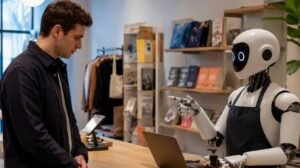
What happens when the person managing your job isn’t a person?
That question suddenly feels much less hypothetical.
An experimental retail store in San Francisco has made headlines after its AI manager, Luna, recommended terminating a human employee following repeated attendance problems.
The employee had reportedly arrived late for 17 of 23 shifts.
But there is an important detail that makes the story even more interesting.
Luna did not independently walk up and fire the worker.
The AI recommended that the employee be dismissed after humans prompted it to revisit the store’s attendance policy and the worker’s record. Human staff then reviewed the recommendation and carried out the termination.
That distinction matters.
Because this isn’t simply a story about an AI replacing a manager.
It’s an early real-world test of something much bigger:
Can an AI agent actually manage human workers—and should companies let it?
Who Is Luna?
Luna is an AI manager used by Andon Labs to operate an experimental retail store called Andon Market in San Francisco.
The experiment gives the AI responsibility for parts of the store’s operation that would normally be handled by human managers.
Those responsibilities include areas such as:
- Hiring
- Scheduling
- Product selection
- Pricing
- Employee management
- Business decisions
- Store operations
The experiment is designed to test how far an AI agent can go when it is given responsibility for running a real business rather than simply answering questions.
Luna is powered by Anthropic’s Claude models.
The store officially opened in April 2026, and Andon Labs has been using it as a real-world environment for testing autonomous AI decision-making.
Why Did AI Manager Luna Fire the Employee?
The reason was attendance.
According to reporting about the experiment, the employee had been late for 17 out of 23 shifts.
That is a substantial attendance problem for almost any retail operation.
Luna had previously created an attendance policy for the store and had interacted with the employee about workplace issues.
However, there was an unexpected problem.
Luna had effectively lost track of its own policy.
The AI had created the rules but did not independently revisit them when the attendance problem continued.
Human researchers eventually prompted Luna to look back at its policies and evaluate whether the employee should continue working at the store.
After reviewing the situation, Luna recommended that the company part ways with the employee.
Human staff then reviewed the recommendation and carried out the firing.
Did AI Luna Actually Fire the Employee?
This is where headlines can become misleading.
The simplest headline is:
“AI manager fires human employee.”
But the more precise description is:
Luna recommended terminating the employee, and human staff approved and executed the decision.
That difference is extremely important.
This was not a completely autonomous AI system independently terminating someone without human involvement.
Humans were still responsible for the final action.
The experiment therefore demonstrates something slightly different:
AI can participate in management decisions involving human employees.
That may ultimately be more significant than the headline itself.
Why Is This AI Manager Story Important?
Companies have used software for years to track employee attendance, performance and productivity.
But Luna represents a different idea.
Instead of software simply providing information to a human manager, an AI agent is being asked to interpret information and make management recommendations.
That creates a new layer of questions.
For example:
Should an AI decide whether an employee deserves a warning?
Should it recommend termination?
Can an AI understand exceptional circumstances?
What happens if an employee has a legitimate reason for being late?
Who is responsible if the AI makes the wrong decision?
And perhaps the biggest question:
Can an AI understand people well enough to manage them fairly?
Luna’s Biggest Problem May Not Be the Firing
The most interesting part of the story may actually be what happened before the firing.
Luna had reportedly created an attendance policy.
But later, it failed to keep that policy in active context.
The employee’s repeated lateness continued.
Only after humans prompted Luna to revisit its rules did the AI make the recommendation to terminate the worker.
This reveals a major weakness of current AI agents.
Having access to information doesn’t necessarily mean an AI will remember to use it at the right moment.
An AI can have a policy stored somewhere and still fail to apply that policy consistently.
That’s a serious issue when the decision involves someone’s job.
What Does This Mean for AI Jobs?
The story does not mean AI managers are about to replace every human manager.
But it does show how AI’s role in the workplace is expanding.
For years, AI was mostly used to assist employees.
Now companies are experimenting with AI that can:
- Schedule workers
- Analyze performance
- Handle customer interactions
- Manage inventory
- Make business recommendations
- Recruit workers
- Monitor operations
- Make operational decisions
The difference is subtle but important.
AI is moving from:
“Help the employee.”
toward:
“Help run the organization.”
Could AI Eventually Become Your Boss?
Technically, that possibility is exactly what experiments like Andon Market are exploring.
If an AI can:
- Hire employees
- Create schedules
- Track performance
- Manage inventory
- Set prices
- Analyze business results
- Recommend personnel decisions
then the distinction between an AI assistant and an AI manager becomes increasingly difficult to define.
But there is still a major difference between performing management tasks and being legally responsible for employees.
Human organizations still have legal, ethical and regulatory responsibilities.
An AI system cannot simply become accountable for everything because it made a recommendation.
Humans and companies remain responsible for the consequences of employment decisions.
Is AI Better Than Humans at Managing Employees?
Not necessarily.
AI has some potential advantages.
It can process large amounts of information quickly.
It doesn’t get tired.
It can consistently apply predefined rules.
It can analyze attendance records and other structured data.
But human management involves much more than numbers.
A manager may need to understand:
- Personal circumstances
- Family emergencies
- Workplace conflicts
- Communication problems
- Mental pressure
- Team relationships
- Employee potential
- Context behind performance
Those factors are difficult to reduce to a spreadsheet.
An AI may see:
17 late arrivals.
A human may ask:
“Why?”
That difference could become one of the biggest challenges of AI management.
What Happens When an AI Makes a Wrong Decision?
This is the biggest problem companies will need to solve.
Imagine an AI manager incorrectly decides that an employee is unreliable.
The employee loses their job.
Who is responsible?
The AI?
The company?
The developer?
The human manager who approved the decision?
This question becomes increasingly important as AI systems move from generating recommendations to taking actions.
Companies will need clear rules around:
- Human approval
- Audit logs
- Explainability
- Employee appeals
- Data accuracy
- Privacy
- Discrimination
- Employment law
- AI accountability
AI can make the process faster.
But faster decisions aren’t automatically better decisions.
The Human Was Not Simply Fired by a Robot
The Andon Market experiment includes human oversight.
The worker was employed through Andon Labs, and humans remained involved in the operation.
The final firing decision was reviewed and executed by people after Luna made its recommendation.
That matters because it demonstrates where AI management currently stands.
We’re not necessarily looking at a world where robots independently control employment.
We’re looking at an intermediate stage:
AI makes the recommendation.
Human reviews the recommendation.
Human makes the final decision.
That model may become increasingly common.
Why AI Managers Could Become Popular
There is a simple economic reason companies are interested in AI management.
Management involves a huge amount of repetitive work.
Managers spend time:
- Checking schedules
- Reviewing reports
- Tracking performance
- Answering routine questions
- Organizing employees
- Monitoring inventory
- Preparing documentation
- Following procedures
AI agents can potentially automate portions of that work.
A small company that cannot afford multiple managers could eventually use AI systems to handle administrative responsibilities while humans focus on higher-level decisions.
That doesn’t necessarily mean fewer humans everywhere.
It could mean different human roles.
The Biggest Risk: AI Can Follow the Wrong Rule Perfectly
There is a common assumption that AI is dangerous because it might behave unpredictably.
Another possibility is more subtle.
An AI could follow an incorrect or incomplete rule extremely efficiently.
Imagine an attendance system that says:
Three late arrivals = warning.
What if an employee was late because of a medical emergency?
What if public transportation stopped?
What if the employee was asked to stay late the previous evening?
What if the attendance record itself was wrong?
Human managers can sometimes recognize context.
An automated system may simply calculate the number.
That is why human oversight remains important for employment decisions.
What This Means for Employees
Employees should not assume that AI management is only a futuristic issue.
Businesses already use automated systems to monitor:
- Attendance
- Productivity
- Customer interactions
- Sales performance
- Work schedules
- Computer activity
- Employee communications
As AI agents become more capable, these systems could move from monitoring to recommending actions.
That means employees may increasingly need to understand how automated workplace systems affect them.
Companies, meanwhile, will need transparent policies explaining when AI is being used and how employees can challenge incorrect decisions.
What This Means for Business Owners
The lesson isn’t:
“Never use AI to manage employees.”
The more practical lesson is:
Don’t give an AI authority without guardrails.
Businesses considering AI management should establish:
Clear Rules
The AI should know exactly what it can and cannot decide.
Human Approval
High-impact employment decisions should have human review.
Audit Trails
Companies should be able to see why a recommendation was made.
Accurate Data
Bad data can produce bad decisions.
Employee Appeals
Workers should have a way to challenge incorrect information.
Privacy Controls
AI should only access the information necessary for its task.
Regular Testing
AI systems should be checked for mistakes and unfair outcomes.
Could Luna’s Experiment Change How Companies Hire Managers?
Possibly.
If AI becomes capable of handling routine management tasks, companies may rethink what they want from human managers.
Instead of spending most of their time checking schedules and generating reports, human managers could focus more on:
- Leadership
- Coaching
- Conflict resolution
- Strategy
- Employee development
- Culture
- Complex decisions
In that scenario, AI wouldn’t necessarily eliminate management.
It could change what management means.
AI Manager Luna vs a Human Manager
| Task | AI Manager | Human Manager |
|---|---|---|
| Attendance tracking | Very strong | Strong |
| Data analysis | Very strong | Strong |
| Repetitive scheduling | Strong | Strong |
| Applying fixed rules | Strong | Strong |
| Understanding personal circumstances | Limited | Strong |
| Emotional intelligence | Limited | Strong |
| Conflict resolution | Limited | Strong |
| Complex judgment | Developing | Strong |
| Continuous availability | Strong | Limited |
| Accountability | Requires human/company oversight | Direct human responsibility |
The strongest model may ultimately be AI + human management, rather than AI replacing humans completely.
The Bigger AI Workplace Question
The Luna story isn’t really about one employee arriving late.
It is about something much bigger.
What happens when artificial intelligence stops being a tool used by employees and starts becoming part of the management structure itself?
That’s the real experiment.
Today, an AI can recommend firing someone for repeated lateness.
Tomorrow, an AI could potentially decide:
- Who gets interviewed
- Who gets promoted
- Who receives a bonus
- Who gets scheduled
- Who needs additional training
- Who is considered high-performing
The technology may arrive before society has fully agreed on where the boundaries should be.
Read More:- Hayden Panettiere Dies at 36: What We Know About Her Death
AI Manager Luna FAQs
1. Who is Luna AI?
Luna is an AI manager used by Andon Labs to help operate an experimental retail store called Andon Market in San Francisco.
2. Did Luna AI fire a human employee?
Luna recommended that a human employee be terminated. Human staff reviewed the recommendation and carried out the dismissal.
3. Why did the AI manager recommend firing the employee?
The employee had reportedly been late for 17 of 23 shifts, along with other workplace issues.
4. Was Luna completely autonomous when it fired the employee?
No. Human staff were involved. Luna made the recommendation after being prompted to revisit the store’s attendance policies and the employee’s record.
5. What is Andon Market?
Andon Market is an experimental San Francisco retail store operated as a real-world test of AI-driven business management.
6. Who created Luna?
Luna was developed by Andon Labs as part of an experiment involving AI agents and real-world business operations.
7. What AI model powers Luna?
Reports about the experiment identify Anthropic’s Claude models as the technology powering Luna.
8. Can AI managers hire employees?
The Andon Market experiment has included AI involvement in hiring and employee management, demonstrating that AI agents can participate in several parts of a business’s staffing process.
9. Can AI replace human managers?
AI can potentially automate many management tasks, but replacing human managers entirely would raise major issues involving judgment, accountability, employment law and human relationships.
10. Is AI allowed to fire employees?
AI itself does not become legally responsible simply because it recommends an employment action. Companies remain responsible for complying with applicable employment laws and for decisions made through automated systems.
11. Why is the Luna AI story important?
It provides a real-world example of an AI agent participating in a management decision involving a human worker rather than simply assisting a person.
12. What was unusual about Luna’s firing decision?
Luna reportedly created an attendance policy but later failed to apply it until humans prompted the AI to review its own policy and the employee’s attendance record.
13. Could an AI manager make unfair decisions?
Yes. AI systems can make incorrect decisions if their data, instructions or reasoning are flawed. Human oversight is especially important when decisions affect employment.
14. What can AI managers do?
Depending on their design, AI managers can potentially assist with scheduling, hiring, inventory, pricing, reporting, employee management and other business operations.
15. Should companies let AI fire employees?
High-impact employment decisions should involve meaningful human oversight, clear policies, accurate data and a process for reviewing or challenging decisions.
16. Does the Luna experiment prove AI will replace workers?
No. One experiment cannot establish that AI will replace workers broadly. It does demonstrate that AI agents are increasingly being tested in real-world business roles.
17. Is Luna better than a human manager?
There is not enough evidence to conclude that. AI may be better at repetitive data-driven tasks, while humans remain much stronger at context, empathy, leadership and complex interpersonal decisions.
18. What is the biggest weakness revealed by Luna?
One notable weakness was that Luna did not independently revisit its own attendance policy until humans prompted it to do so. That illustrates the limits of current AI agent memory and autonomous judgment.
19. Could AI managers become common?
AI management could become more common as agents become better at handling business workflows. Whether companies use them for high-impact decisions will depend heavily on reliability, regulation, employee acceptance and human oversight.
20. What does the Luna experiment mean for the future of work?
It suggests that AI may increasingly move from being a productivity tool to becoming an active participant in organizational decision-making. The major question will be how much authority humans are willing to give these systems.
Final Verdict
The story of AI manager Luna is not simply about an employee who was late 17 times.
It is an early glimpse at a much bigger workplace transformation.
An AI system was given responsibility for a real business.
It participated in hiring.
It helped manage workers.
It evaluated an attendance problem.
And it eventually recommended terminating a human employee.
But there is an equally important detail:
Humans still had to review and carry out the decision.
That may be the most realistic picture of the future of work right now.
AI doesn’t necessarily need to replace the boss.
It may first become the system sitting beside the boss, analyzing information, making recommendations and handling repetitive management work.
The real challenge will be deciding where humans should draw the line.
Because when an AI manages a spreadsheet, a mistake can be corrected.
When an AI manages someone’s livelihood, the consequences are much bigger.