
Artificial Intelligence Is Solving Real Business Problems
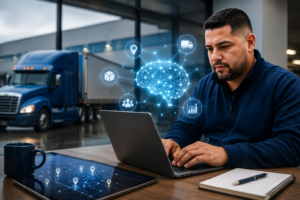
Artificial intelligence is transforming the workplace at an incredible pace.
While much of the public conversation focuses on AI chatbots, image generators, and virtual assistants, some of the most meaningful innovations are happening behind the scenes inside global businesses.
One remarkable example comes from Walmart’s logistics network.
Instead of building another AI chatbot, a Walmart manager used artificial intelligence to solve a real operational challenge—helping truck drivers spend less time away from home while improving the company’s supply chain efficiency.
The story demonstrates that AI isn’t just changing software development.
It’s changing how everyday employees solve business problems.
From Truck Driver to AI Innovator
Before joining Walmart’s management team, Leo Garcia spent years working as a professional truck driver.
That firsthand experience gave him a unique understanding of one of the industry’s biggest frustrations.
Long hours on the road often meant drivers spent unnecessary time away from their families.
Rather than accepting the problem as unavoidable, Garcia looked for a smarter solution.
His goal wasn’t simply improving logistics.
He wanted to improve the daily lives of truck drivers while making operations more efficient for Walmart.
This combination of business knowledge and practical experience became the foundation for an AI-powered solution.
Learning AI Without Becoming a Software Engineer
One of the most inspiring parts of Garcia’s journey is that he didn’t have to become a professional programmer.
Instead, he expanded his skills through Walmart’s internal AI and data education programs.
These courses focused on teaching employees how artificial intelligence can improve business operations.
Rather than writing thousands of lines of code manually, Garcia learned how modern AI tools could help transform ideas into working software.
This reflects a growing trend across industries.
Businesses are increasingly encouraging employees from non-technical backgrounds to learn AI skills that improve productivity and innovation.
What Is Vibe Coding?
One of the technologies behind this transformation is known as vibe coding.
Vibe coding allows users to describe software in plain English while AI generates much of the underlying code automatically.
Instead of writing every programming instruction manually, users explain what they want the software to accomplish.
For example:
“Create a dashboard that analyzes available truck loads, recommends the most efficient routes, and prioritizes drivers returning home.”
The AI converts that description into functional software.
This approach dramatically lowers the barrier to software development and allows business experts—not just developers—to build useful internal tools.
The Logistics Problem Walmart Needed to Solve
The trucking industry constantly faces one expensive challenge:
Empty miles.
An empty mile occurs when a truck travels without carrying freight.
These unnecessary trips increase:
- Fuel costs
- Driver hours
- Vehicle wear
- Carbon emissions
- Delivery expenses
At the same time, delayed shipments can prevent drivers from returning home on schedule.
Finding the best available load at exactly the right time is extremely difficult using traditional planning methods.
This is where artificial intelligence becomes valuable.
How the AI Tool Works
Using Walmart’s internal AI coding assistant, Garcia developed a logistics tool capable of analyzing hundreds of available freight loads in seconds.
The system evaluates factors such as:
- Driver location
- Delivery schedules
- Warehouse readiness
- Available trailers
- Route efficiency
- Delivery priorities
Instead of dispatchers manually reviewing countless options, the AI recommends the most efficient load assignments almost instantly.
The result is faster decision-making and improved operational efficiency.
A Real-World Example
Imagine a shipment scheduled for pickup is suddenly delayed by several hours.
Without AI, a driver might wait at the warehouse, wasting valuable time.
Garcia’s AI tool identifies another nearby shipment heading toward a similar destination.
The driver continues working without interruption while another driver later collects the delayed load.
Everyone benefits.
Drivers spend less time waiting.
Deliveries stay on schedule.
The company reduces unnecessary transportation costs.
Small improvements like this create major operational savings when multiplied across thousands of deliveries.
Why This Story Matters
Many people believe artificial intelligence is useful only for software developers.
This example proves otherwise.
Employees with real-world industry experience often understand operational problems better than programmers.
When those employees gain access to AI-powered development tools, they can build practical solutions that directly improve business performance.
Artificial intelligence is becoming a productivity partner rather than simply another technology platform.
What Businesses Can Learn
Organizations hoping to benefit from AI should focus on more than simply purchasing software.
The biggest competitive advantage comes from empowering employees.
Successful companies are:
- Investing in AI education
- Encouraging experimentation
- Supporting innovation from every department
- Giving employees access to AI development tools
- Solving operational problems through automation
Often, the people closest to everyday business challenges create the most valuable AI solutions.
AI Is Reshaping Supply Chain Management
Artificial intelligence is transforming modern logistics in several ways.
Companies now use AI for:
Route Optimization
Reducing delivery times while lowering fuel consumption.
Inventory Forecasting
Predicting product demand more accurately.
Warehouse Automation
Improving picking, packing, and inventory management.
Predictive Maintenance
Identifying vehicle maintenance needs before costly breakdowns occur.
Fleet Management
Helping companies improve driver scheduling and equipment utilization.
Supply chains are becoming faster, smarter, and more efficient through AI-powered decision-making.
The Future of Workplace Innovation
The future of work won’t belong solely to programmers.
It will belong to professionals who combine industry expertise with artificial intelligence.
Whether someone works in:
- Logistics
- Healthcare
- Manufacturing
- Retail
- Finance
- Marketing
- Customer service
AI can help solve everyday operational challenges.
The most valuable employees of the future may not be those who know the most programming languages.
They may be those who understand business problems and know how to use AI to solve them.
Frequently Asked Questions
Is Walmart using AI?
Yes. Walmart uses artificial intelligence across logistics, inventory management, customer service, supply chain optimization, and internal productivity initiatives.
Can non-programmers build AI tools?
Yes. Modern AI coding assistants allow employees with limited programming experience to create useful software by describing their ideas in natural language.
What is vibe coding?
Vibe coding is an AI-assisted development approach where users explain software requirements using plain language, allowing AI to generate much of the underlying code.
Why is AI important in logistics?
AI improves route planning, reduces transportation costs, minimizes delays, optimizes fleet management, and increases overall supply chain efficiency.
Will AI replace logistics workers?
In most cases, AI is designed to support human decision-making rather than replace workers. It helps employees make faster, more informed decisions while reducing repetitive tasks.
Final Thoughts
The Walmart logistics story demonstrates that the future of artificial intelligence isn’t just about building smarter chatbots.
It’s about empowering employees to solve real business problems.
By combining firsthand experience with AI-powered development tools, individuals can create practical solutions that improve productivity, reduce costs, and deliver better outcomes for both businesses and customers.
Organizations that invest in AI education and encourage innovation from within will likely adapt faster than competitors relying solely on traditional software development.
The future belongs to companies where human expertise and artificial intelligence work together—not separately.