
Trump Childhood Vaccine Order: 11 Shocking Changes U.S. Parents Need to Know
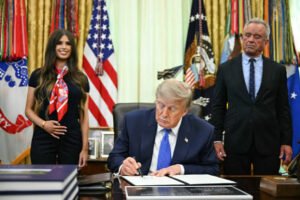
President Donald Trump has signed a new executive order changing the federal approach to childhood vaccine recommendations in the United States. The Trump childhood vaccine order places 11 diseases at the center of a new core recommendation framework and calls for a different approach to several other childhood immunizations.
The announcement has raised immediate questions among American parents: Does this mean children will receive fewer vaccines? Will school requirements change? What happens to vaccines outside the 11-disease group? And should families change existing vaccination schedules?
The answers are more nuanced than the headline.
The Trump childhood vaccine order is a federal policy action that affects recommendations and directs federal agencies to implement a new framework. It does not mean every child will automatically receive exactly 11 shots or that every state will immediately change its school vaccination laws.
Here is what the policy means, what remains uncertain and what parents should know.
What Is the Trump Childhood Vaccine Order?
The Trump childhood vaccine order is an executive action aimed at reshaping the federal government’s approach to childhood immunization recommendations.
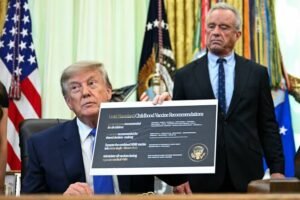
The policy follows an earlier review by the Department of Health and Human Services comparing U.S. vaccine recommendations with those used in peer developed countries. The White House said that assessment identified 11 diseases as a common core of childhood immunization recommendations.
The 11 diseases are:
- Measles
- Mumps
- Rubella
- Diphtheria
- Tetanus
- Pertussis
- Polio
- Haemophilus influenzae type B
- Pneumococcal disease
- Human papillomavirus (HPV)
- Varicella, or chickenpox
The important point is that these are disease targets, not simply a promise that every child will receive 11 injections.
Some vaccines require multiple doses, while combination vaccines can protect against several diseases.
Why Did Trump Change the Childhood Vaccine Framework?
The administration says the Trump childhood vaccine order is intended to bring U.S. recommendations closer to what it considers best practices among peer developed nations.
The White House has argued that the United States has historically maintained a broader routine childhood vaccine schedule than several other developed countries.
Its assessment concluded that 11 disease targets were consistently recommended across peer nations and should form the core of the U.S. universal recommendation framework.
The policy also emphasizes parental choice and what the administration describes as greater flexibility for families and physicians.
Critics have argued that changing long-established recommendations could create uncertainty for parents and healthcare providers.
Does the Trump Childhood Vaccine Order Mean Only 11 Vaccines?
No.
This is one of the biggest misconceptions surrounding the announcement.
The Trump childhood vaccine order focuses on vaccines recommended universally rather than creating a rule that limits every child to 11 injections.
Other immunizations can still be relevant depending on a child’s circumstances.
Federal guidance has previously placed certain vaccines into categories involving high-risk groups or shared clinical decision-making. Those categories have included vaccines involving hepatitis A, hepatitis B, meningococcal disease, dengue and RSV.
That means parents should ask a more specific question:
Which vaccines are recommended for my child and why?
Age, medical history, risk factors, travel and other circumstances can influence the answer.
What Happens to Vaccines Outside the 11?
The Trump childhood vaccine order does not ban vaccines that fall outside the core group.
Instead, the administration’s framework changes how certain immunizations are categorized.
A vaccine may be recommended for a particular high-risk population or considered through shared clinical decision-making between a healthcare professional and a family.
That distinction is important.
A change from “recommended for everyone” to another category does not automatically mean a vaccine has been declared unsafe or unnecessary in every situation.
Parents should therefore avoid interpreting the policy as a blanket instruction to stop vaccinations.
What Does the Order Say About MMR?
The MMR vaccine is another major part of the new policy.
MMR protects against measles, mumps and rubella.
The administration wants these vaccinations to eventually be available as separate measles, mumps and rubella products when those individual vaccines are domestically available.
The order also calls for childhood immunizations to be spaced across separate medical visits where feasible.
That could affect how families schedule pediatric appointments.
However, parents should not independently change their child’s vaccination schedule because of a news report.
A qualified healthcare professional can explain which vaccine products and timing are appropriate for an individual child.
Will the New Policy Change School Vaccine Requirements?
Not automatically.
This is one of the most important distinctions in understanding the Trump childhood vaccine order.
Federal recommendations and state school-entry requirements are not the same thing.
States establish many of their own vaccination requirements for school and childcare. The White House has encouraged states to consider the federal framework, but an executive order does not automatically rewrite every state law.
Parents should therefore check the latest rules with their state’s health department or their child’s school district.
A national news headline should not be treated as proof that a particular school requirement has already changed.
What Role Does the CDC Have?
The CDC remains a major source of information about childhood immunization recommendations.
However, the federal vaccine schedule has also been affected by legal developments.
The CDC currently explains that a March 2026 preliminary court order stayed certain 2025 ACIP actions and the January 5, 2026 schedule revision. The agency says the July 2, 2025 schedule remains the current schedule displayed on its immunization schedule page under that legal framework.
This makes the situation more complicated than simply saying that the latest presidential action instantly replaced every existing vaccine recommendation.
The federal policy environment involves executive orders, agency actions, court decisions and state laws.
What Should Parents Do After the Trump Vaccine Order?
Parents do not need to make sudden medical decisions based on the announcement alone.
Instead, families can take several practical steps.
1. Check your child’s vaccination records
Make sure you know which vaccines and doses your child has already received.
2. Speak with a healthcare professional
Ask which recommendations apply to your child’s age, medical history and individual circumstances.
3. Check your state’s requirements
If your child attends school or childcare, verify the latest rules through the appropriate state or local authority.
4. Avoid viral claims
Social-media posts can confuse federal recommendations with medical advice or state laws.
5. Use official information
When the policy changes, check current information from federal and state health agencies rather than relying on old screenshots or reposted claims.
Why Is the Trump Vaccine Policy Controversial?
The Trump childhood vaccine order has generated debate because it changes both the number of vaccines in the universal recommendation category and the way some vaccinations may be administered.
The administration emphasizes parental choice and individualized decisions.
Medical groups and public-health experts have raised concerns about narrowing universal recommendations and spacing vaccinations across separate visits. Associated Press reporting noted criticism from medical organizations that argued additional delays could leave children vulnerable to vaccine-preventable diseases.
The debate therefore goes beyond the number 11.
It concerns how the United States should balance federal guidance, medical evidence, parental decision-making and public-health protection.
Does the Policy Change Vaccine Safety Evidence?
No.
A change in government recommendation categories should not automatically be interpreted as a scientific finding that a vaccine is dangerous.
The Trump childhood vaccine order is a policy decision. It does not by itself establish new medical evidence about vaccine safety.
Parents researching vaccine safety should look at peer-reviewed scientific evidence and information from qualified medical professionals rather than treating political decisions as scientific proof.
Read More:- Can Gemini AI for Crypto Really Work? 7 Powerful Ways to Use It Smarter
Why Is the Number 11 So Important?
The number 11 represents the administration’s proposed core group of childhood vaccine disease targets.
The White House says these were identified through an assessment comparing U.S. recommendations with peer developed countries.
But the Trump childhood vaccine order should not be reduced to a simple “11 vaccines only” headline.
The more important issue is how federal officials categorize vaccines and how those categories affect recommendations for different children.
What Happens Next?
The next stage will involve implementation.
Federal agencies will need to translate the policy into practical guidance. Vaccine manufacturers and healthcare providers may also have to respond to the administration’s approach to separate vaccines and appointment spacing.
States may review their own policies as well.
That means the Trump childhood vaccine order is likely to remain an evolving issue rather than a one-day change with identical consequences in every state.
Parents should watch for official updates and avoid assuming that every policy detail is already settled.
The Bottom Line
The Trump childhood vaccine order represents a significant change in the administration’s approach to childhood immunization recommendations.
The framework places 11 diseases in the core universal recommendation group while allowing other vaccines to be considered for specific populations or through shared clinical decision-making.
The policy also addresses MMR vaccination and the spacing of childhood immunizations.
But the announcement does not mean every child should automatically receive only 11 shots.
It also does not automatically change every state’s school vaccination requirements.
For parents, the most important distinction is between federal recommendations, state requirements and individualized medical advice.
Before changing a child’s vaccination plan, families should check current official guidance and speak with a qualified healthcare professional.
Frequently Asked Questions About the Trump Childhood Vaccine Order
1. What is the Trump childhood vaccine order?
The Trump childhood vaccine order is an executive action that directs federal health policy toward a new core framework for childhood immunization recommendations.
2. What are the 11 diseases?
The 11 disease targets are measles, mumps, rubella, diphtheria, tetanus, pertussis, polio, Hib, pneumococcal disease, HPV and chickenpox.
3. Does the policy mean children will get only 11 shots?
No. The framework concerns universal recommendations and does not mean every child will receive exactly 11 injections.
4. Are other vaccines banned?
No. Vaccines outside the core group can still have recommendations for particular populations or through shared clinical decision-making.
5. What changes for MMR?
The administration wants individual measles, mumps and rubella vaccines to be used when those products are available domestically.
6. Does the order change school requirements?
The Trump childhood vaccine order does not automatically change every state school requirement. Parents should check their state’s current rules.
7. Should parents change existing vaccine schedules?
Parents should not make medical changes based solely on the executive order or news coverage. Discuss individual decisions with a qualified healthcare professional.
8. Why did the administration choose 11?
The White House says its assessment identified 11 disease targets that were consistently included in childhood vaccine recommendations across peer developed countries.
9. What happens to vaccines outside the core group?
Some may be recommended for higher-risk populations or considered through shared clinical decision-making.
10. Does this policy prove vaccines cause autism?
No. A government policy change does not establish that vaccines cause autism. Parents should rely on established scientific evidence when evaluating medical claims.
11. Can the recommendations change again?
Yes. Federal recommendations can be affected by new agency decisions, court rulings, scientific assessments and future policy changes.
12. Where should parents get reliable information?
Parents should use current federal and state health resources and speak with their child’s healthcare professional for individual medical questions.
13. Is the federal recommendation the same as state law?
No. Federal recommendations and state school-entry requirements are separate issues.
14. Why should parents be careful with social-media posts?
Short posts often leave out important distinctions between federal policy, state requirements and individualized medical advice.
15. What is the biggest thing parents should understand?
The Trump childhood vaccine order is not simply a rule saying that every child gets 11 vaccines and nothing else. The actual framework contains different categories and can involve individual circumstances.
Editorial Note
This GooglixAI article provides news and informational coverage of a developing U.S. health-policy issue. It is not medical advice. Vaccine recommendations, legal decisions and government policies can change. Parents should verify current guidance through official health authorities and consult a qualified healthcare professional before changing a child’s vaccination plan.