
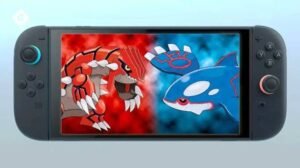
Pokémon Ruby and Sapphire Switch 2: Ultimate Analysis, NSO Expansion & Future Outlook
Executive Summary
-
Game Boy Advance Heritage: Pokémon Ruby and Sapphire defined the GBA era in 2002/2003, selling over 16 million units and introducing weather mechanics, double battles, and EV/IV reworks.
-
NSO Expansion Potential: With Nintendo Switch Online + Expansion Pack already supporting Game Boy Advance titles, bringing Gen 3 to the Switch 2 platform is the most logical next step for legacy preservation.
-
Hardware & Visual Upgrades: The increased RAM and processing performance of the Switch 2 allow for crisp integer scaling, modern display shaders, and enhanced online netcode for trading and battles.
-
Remake vs. Emulation Debate: While fans debate whether Hoenn deserves a full 3D overhaul (Omega Ruby/Alpha Sapphire port) or GBA NSO release, historical release cadence favors an NSO digital release first.
Section 1: Introduction & Breaking Context
The intersection of classic franchise preservation and next-generation hardware has reached a critical focal point with Pokémon Ruby and Sapphire Switch 2 discussions dominating community forums and industry analysis. As Nintendo prepares its hardware ecosystem for its next-generation hybrid platform, the fate of Generation 3—the beloved Hoenn region originally launched on the Game Boy Advance—remains a top priority for millions of players worldwide.
Originally released in Japan in late 2002 and North America in early 2003, Pokémon Ruby and Pokémon Sapphire marked a fundamental turning point for the series. They rebuilt the underlying engine, introduced modern competitive stat systems (Effort Values and Individual Values), established abilities and double battles, and presented a dynamic world shaped by weather mechanics and legendary primal forces.
As fans look toward the Switch 2 hardware, the legacy of Hoenn presents two distinct pathways for Nintendo and Game Freak: an authentic retro port integrated into the Nintendo Switch Online (NSO) + Expansion Pack service, or a high-definition modern revival. Understanding the technical, commercial, and historical factors surrounding a potential release reveals critical insights into Nintendo’s broader legacy strategy.
For more free AI tools, visit now: https://freeaitools4u.com/
Section 2: In-Depth Background & Historical Context
To understand why the prospect of playing Pokémon Ruby and Sapphire on next-generation hardware carries such weight, one must examine the timeline of the Hoenn region across different hardware generations.
Hoenn Region Timeline Across Nintendo Hardware
When Ruby and Sapphire launched, they broke compatibility with Generations 1 and 2 due to the complete structural rewrite of how Pokémon data was stored. This decision—while controversial at the time—laid the foundation for modern competitive play. The introduction of abilities like Drizzle and Drought transformed battles into dynamic tactical encounters, while nature modifiers gave individual Pokémon distinct battle profiles.
Section 3: Strategic & Core Technical Analysis
Evaluating how Hoenn content will be integrated into next-gen hardware requires looking at emulation mechanics, visual scaling, and online architecture.
Emulation Capabilities and Display Enhancements
The architecture of Nintendo’s next-generation hardware offers significant overhead for Game Boy Advance emulation. Running classic GBA titles through an updated NSO app on higher-resolution displays presents distinct technical advantages:
-
Integer Scaling and Pixel Crispness: GBA titles ran natively at a resolution of pixels. On modern 1080p or 4K output displays, low-level integer scaling prevents blurry bilinear filtering, preserving clean pixel art.
-
Custom Shader Presets: Advanced display options can recreate the sub-pixel grid structure and color profile of original GBA LCD panels (both original non-backlit screens and later AGS-101 displays).
-
Save State & Rewind Infrastructure: Modern system memory permits real-time RAM snapshots, allowing instant state saving, fast-forwarding through grinding sequences, and seamless local or online netcode synchronizations.
+-----------------------------------------------------------------------+
|                 NEXT-GEN HYBRID HARDWARE ARCHITECTURE                 |
+-----------------------------------------------------------------------+
                                   |
        +--------------------------+--------------------------+
        |                                                     |
        v                                                     v
+-------------------------------+             +-------------------------------+
|     NSO Emulation Engine      |             |    Full HD / 4K Remake Engine  |
| - Custom LCD Shaders          |             | - Modern Dynamic Lighting     |
| - Netcode Packet Sync         |             | - Seamless World Loading      |
| - Cloud Save Integration      |             | - Integrated Home Connectivity|
+-------------------------------+             +-------------------------------+
Modern Wireless Trading and Home Integration
A major hurdle for legacy Pokémon games on modern hardware is connectivity with Pokémon HOME. On the Nintendo 3DS Virtual Console (which hosted Gen 1 and Gen 2 titles), Nintendo utilized a custom transfer application to bridge internal game saves to cloud storage.
For a potential GBA release on next-gen hardware, Nintendo and Game Freak must implement a virtual network layer within the emulator to interpret standard GBA Link Cable packet transmissions. This would allow players to trade and battle over local wireless or system-level online sessions while maintaining read-write save compatibility with cloud management services.
Section 4: Global Impact & Industry Context
The commercial performance of legacy titles remains a cornerstone of Nintendo’s ongoing software engagement model.
Modern Retro Gaming Strategy
Nintendo’s migration away from traditional Virtual Console microtransactions toward a recurring subscription model (Nintendo Switch Online + Expansion Pack) changes how legacy games are deployed. Adding high-profile mainline RPGs acts as a major driver for subscription acquisition and retention.
-
Engagement Retention: Long-form RPGs like Pokémon Ruby and Pokémon Sapphire provide dozens of hours of gameplay, keeping users subscribed over longer billing cycles.
-
Global Nostalgia Economics: Players who grew up with the Game Boy Advance during the early 2000s represent a prime demographic with significant purchasing power in today’s gaming market.
Section 5: Implementation Roadmap for Legacy Support
If Nintendo chooses to optimize classic Game Boy Advance titles for its next-generation platform, several key development phases must take place:
-
Emulation Engine Optimization: Refine low-latency frame rendering and build robust save-state management to prevent save corruption during cloud synchronization.
-
Virtual Link Cable Emulation: Build a software abstraction layer that translates legacy 16-bit serial hardware communication into modern TCP/UDP network protocols.
-
Pokémon HOME API Integration: Develop background reading utilities that scan NSO save files to allow one-way transfers of captured Pokémon to modern storage ecosystems.
-
Localization and Regional ROM Alignment: Ensure full compatibility across North American, European, and Japanese ROM revisions (including fix patches introduced in original bug-fix revisions like the Berry Program Update).
Section 6: Future Predictions & Economic Outlook
Looking ahead, the treatment of Generation 3 content will likely follow one of two trajectory paths over the coming platform cycle:
-
Scenario A (NSO Direct Release): Pokémon Ruby, Sapphire, and Emerald arrive on the NSO + Expansion Pack service. This option provides quick accessibility, low development overhead, and high subscription value.
-
Scenario B (HD-2D or Full 3D Re-imagining): Following the trend set by Brilliant Diamond and Shining Pearl, Nintendo partners with an external studio (such as ILCA) or develops an internal HD-2D remake using modern rendering pipelines.
Economically, Scenario A offers immediate value to the NSO ecosystem, while Scenario B represents a full retail release capable of generating major global physical and digital software sales.
Read More:- What to Do When Relationships Get Tough: 7 Proven Master Strategies for 2026
Section 7: Frequently Asked Questions (GEO & Voice Snippets)
Will Pokémon Ruby and Sapphire be available on the Switch 2?
While Nintendo has not officially announced standard GBA Pokémon titles for the platform yet, the inclusion of Game Boy Advance support within Nintendo Switch Online makes a release technically straightforward and highly probable during the console’s lifecycle.
Can you trade Pokémon from GBA games on Switch to Pokémon HOME?
Currently, GBA games are not available on NSO with Pokémon HOME functionality. However, if mainline GBA titles are released on the service, Nintendo is expected to implement cloud transfer support similar to the 3DS Virtual Console titles.
What is the difference between Pokémon Ruby/Sapphire and Emerald?
Pokémon Emerald is the enhanced third version of Generation 3. It combines the storylines of both Team Magma and Team Aqua, introduces animated battle sprites, adds the Battle Frontier facility, and adjusts wild Pokémon availability.
Are there differences between running GBA games on original hardware vs Switch 2?
Modern hardware provides sharper displays via digital scaling, customized LCD grid filters, cloud save backups, fast-forward features, and online multiplayer connectivity that replaces physical link cables.
Section 8: Strategic Verdict
The arrival of classic Hoenn adventures on next-generation hybrid hardware represents an inevitable convergence of nostalgia, robust technical emulation, and strategic subscription design. Whether delivered as a retro GBA library expansion or a full visual reimagining, returning to the Hoenn region remains one of the most anticipated potential milestones for the franchise’s strategic future.