
Greenland Deal: 5 Key Developments as U.S. and Denmark Reach Major Arctic Security Pact
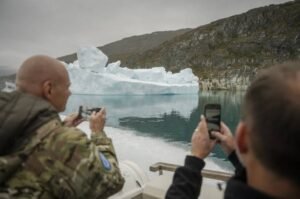
The Greenland Deal has become a major international security story after the United States, Denmark and Greenland reached an agreement aimed at strengthening security around the strategically important Arctic island. The pact is expected to be formally signed at the United Nations General Assembly in New York on Tuesday, September 22, 2026.
Quick Answer
The Greenland Deal is a new U.S.-Denmark-Greenland security agreement that would expand the U.S. military role in Greenland while placing greater emphasis on NATO’s collective responsibility for Arctic security. President Donald Trump has described the arrangement as giving the U.S. permanent control over Greenland’s security, while Denmark and Greenland have emphasized that Greenland’s sovereignty remains intact.
Current Status: Deal Reached, Formal Signing Expected Tuesday
The agreement has been reached but its full text has not yet been publicly released. Denmark, Greenland and the United States are expected to formally sign the pact during the UN General Assembly in New York on September 22.
The disagreement over how to describe the agreement is significant. Trump has said it gives Washington “permanent control” over security and other needs in Greenland. Danish officials have instead described Arctic security as a shared NATO responsibility and said the agreement does not compromise Danish or Greenlandic sovereignty.
5 Key Developments
- U.S., Denmark and Greenland reached a security agreement: The pact is designed to expand cooperation and the U.S. military presence in Greenland.
- NATO is expected to have a larger role: Denmark says the arrangement places Arctic security within a broader NATO framework rather than leaving responsibility solely to Washington and Copenhagen.
- Greenland remains under Danish sovereignty: Danish and Greenlandic officials have stressed that the agreement does not transfer sovereignty over the island to the United States.
- U.S. access could expand: Reuters reports that the agreement would provide expanded U.S. military access and prevent non-NATO adversaries from establishing military bases or making sensitive investments there.
- Greenland-linked stocks jumped: U.S.-listed companies with Greenland mining interests saw sharp market moves after the announcement, reflecting investor attention on the island’s strategic mineral potential.
For more free AI tools, visit now: https://freeaitools4u.com/
Why Is Greenland So Important to the United States?
Greenland is strategically important because of its location between North America and Europe and its position in the Arctic. The island is also home to the U.S. Pituffik Space Base, making it relevant to missile warning, space surveillance and broader Arctic defense operations.
The Arctic has become increasingly important to NATO as Russia and China expand their activity and interest in the region. NATO says seven of the eight Arctic states are members of the alliance, giving the organization a major security role in the High North.
Does the Greenland Deal Give the U.S. Ownership of Greenland?

No. The agreement does not transfer Greenland’s sovereignty or make Greenland part of the United States. Greenland is an autonomous territory within the Kingdom of Denmark, and Danish and Greenlandic officials have said the pact preserves Greenland’s sovereignty.
Trump’s description of “permanent control” refers to U.S. security responsibilities and access, rather than a publicly announced transfer of territorial ownership. The exact legal language will become clearer once the agreement is formally signed and released.
What Does NATO Have to Do With the Greenland Deal?
NATO is expected to share responsibility for Arctic security under the new arrangement. Denmark’s foreign minister said the agreement would put Arctic security under NATO’s watch rather than leaving the issue solely to the United States and Denmark.
That approach fits NATO’s existing Arctic strategy. The alliance launched Arctic Sentry in February 2026 to strengthen deterrence and defense across the Arctic and High North.
Could the Greenland Deal Affect Critical Minerals?
The agreement has increased investor attention on Greenland’s mineral resources, although the security pact itself does not automatically authorize new mining projects. Greenland contains deposits of rare earth elements and other strategically important minerals, making the territory relevant to Western efforts to diversify supply chains.
Shares of several Greenland-linked mining companies rose sharply after Trump’s announcement, with Critical Metals among the companies receiving significant market attention.
What Happens Next?
The next major step is the planned signing of the security agreement on September 22 at the UN General Assembly in New York. The full text should provide more clarity on U.S. military access, NATO’s responsibilities, investment restrictions and Greenland’s role in future security decisions.
The agreement may also require approval or ratification under Danish and Greenlandic procedures, depending on its final legal form.
Final Take
The Greenland Deal represents a significant shift in the way Washington, Copenhagen and Nuuk are approaching Arctic security. The United States is expected to gain stronger military access, while Denmark says NATO will share responsibility for the region. At the same time, Greenland’s sovereignty remains a central point of the agreement, and the pact’s precise implications will depend on the final text.
Read More:- Mac mini M6: Apple’s New $899 Desktop Launches With Major AI Performance Boost
FAQs
1. What is the Greenland Deal?
The Greenland Deal is a security agreement involving the United States, Denmark and Greenland designed to strengthen Arctic defense and expand U.S. military cooperation while maintaining Greenland’s sovereignty.
2. Has the Greenland Deal been formally signed?
Not yet. As of September 21, 2026, the agreement is expected to be signed at the UN General Assembly in New York on September 22.
3. Does the U.S. own Greenland?
No. Greenland remains an autonomous territory within the Kingdom of Denmark. The new security arrangement does not publicly transfer sovereignty to the United States.
4. Why does the U.S. want a stronger security role in Greenland?
Greenland’s Arctic location and the existing U.S. military presence at Pituffik Space Base make it strategically important for North American and Arctic defense.
5. Will NATO be involved?
Yes. Denmark says the agreement will place Arctic security within a broader NATO framework, with the alliance sharing responsibility for security in the region.
Pingback: Elizabeth Holmes Documentary: ‘You Can See Everything’ Trailer